Es Molí de Dalt Menorca: Why You Should Put This Little Windmill on Your Map
There are places in Menorca that shout for attention: turquoise coves, whitewashed fishing villages and spectacular sunsets. Then there is Es Molí de Dalt.
Standing near the north entrance to Sant Lluís, this beautifully restored windmill looks almost modest beside the island’s famous beaches. But step inside and the story changes. You are suddenly looking at the machinery, tools and everyday objects that helped shape life in this corner of Menorca more than 260 years ago.
For me, that is exactly what makes this place worth seeking out. Es Molí de Dalt isn’t just a pretty windmill for your camera roll; it is a compact window into Menorca’s working past.
And because it sits in the heart of Sant Lluís, you can easily combine it with a stroll around the town, lunch, a winery visit or a trip to the nearby southeastern beaches.
What Is Es Molí de Dalt?
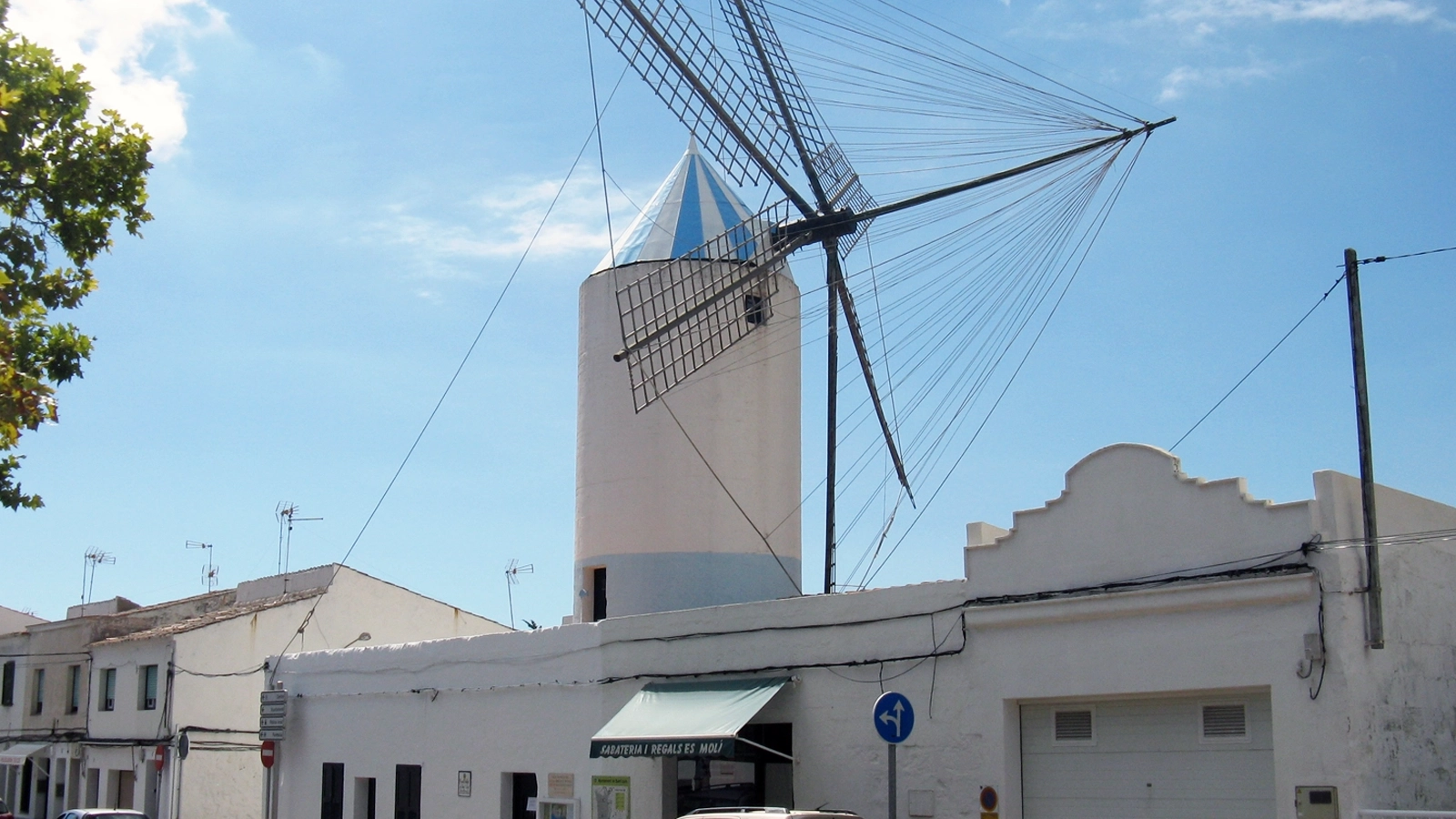
Es Molí de Dalt is an 18th-century flour windmill in Sant Lluís, southeastern Menorca. It was built in 1762, during the period of French occupation that also saw the foundation and development of Sant Lluís.
The name translates roughly as “Upper Mill”. And there is a fascinating reason why it matters so much to the town. Sant Lluís once had three flour mills:
Es Molí de Dalt, built in 1762
Molí d’Enmig, built in 1776
Molí de Baix, built around 1780
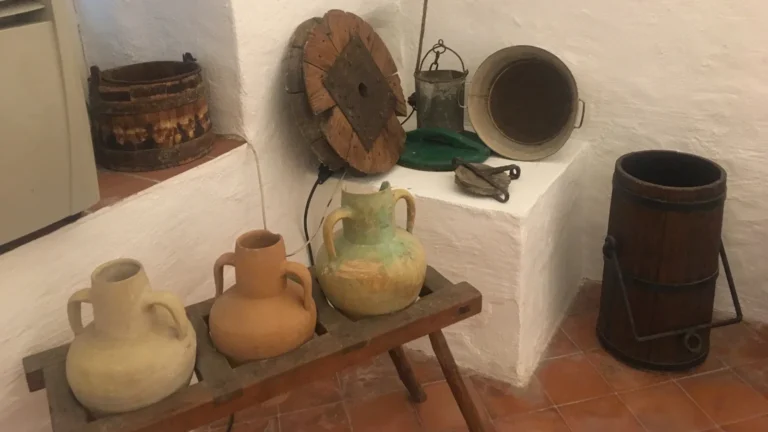
Es Molí de Dalt is the survivor. The three mills once formed part of the town’s agricultural landscape, grinding cereals produced by farms in the surrounding countryside. Today, Es Molí de Dalt houses the Museu Etnològic de Sant Lluís, preserving machinery and objects associated with traditional rural life.
That makes the mill much more than an architectural curiosity. It is a surviving piece of the machinery that once powered everyday life in Sant Lluís.
A Little History: From Flour Mill to Museum
The story of Es Molí de Dalt is tied closely to Sant Lluís itself.
The French established Sant Lluís during their occupation of Menorca in the 18th century. The town developed around a distinctive planned street layout, with the church and central square forming its heart. Es Molí de Dalt became one of the defining landmarks at the settlement’s entrance.
The mill remained connected with flour production for generations. Then came 1949.
A powerful tramuntana windstorm damaged the mill, bringing down its cap and external elements and putting an end to its working life. The building subsequently deteriorated before the Consell Insular de Menorca acquired it and later transferred it to the Sant Lluís town council for cultural use. It was officially inaugurated as a museum in 1987.
I love this kind of history because it gives an old building a second act. Es Molí de Dalt could easily have become another abandoned relic. Instead, it became a place where visitors can understand how the building actually worked.
What Can You See Inside Es Molí de Dalt?
This is where the visit becomes much more interesting than simply photographing the exterior.
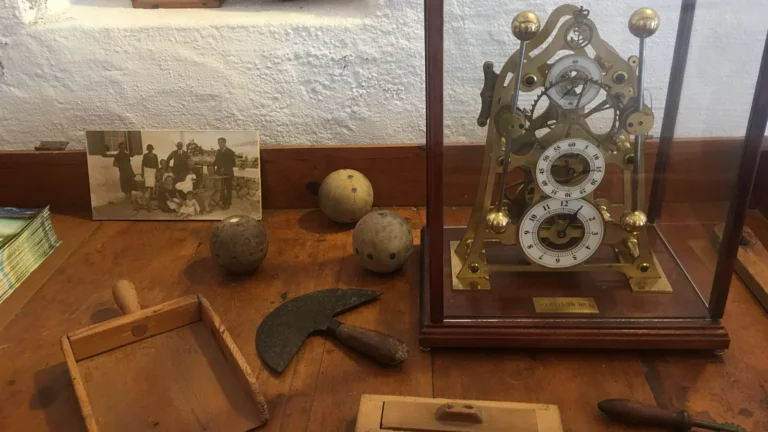
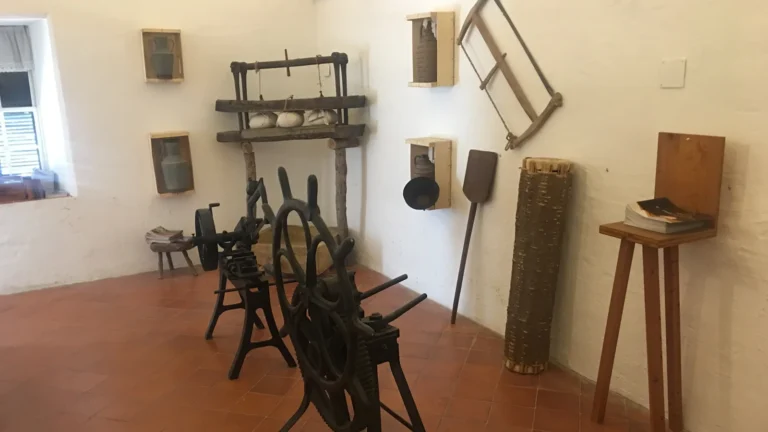
The Museu Etnològic Molí de Dalt focuses on the traditional rural life of Menorca. The collection includes agricultural implements and machinery, alongside objects associated with everyday work. Sources describe items including farming tools, a cheese press, blacksmithing equipment, a bread-kneading machine and an old farm cart.
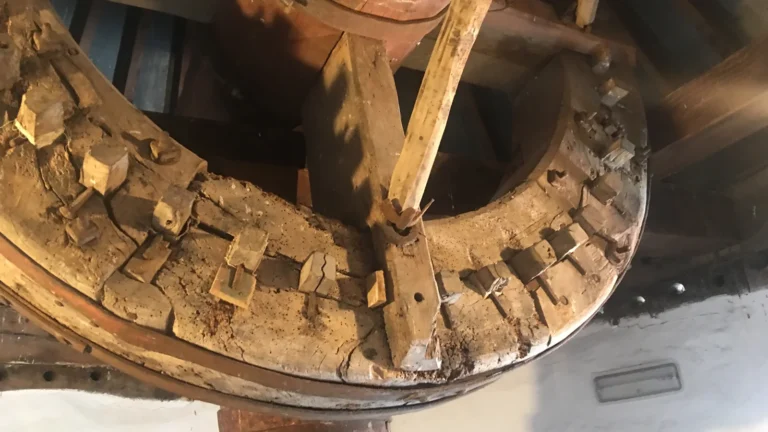
But the star of the show is obviously the mill itself. Look closely at the original machinery. One of the most remarkable details is that parts of the original milling machinery have survived.
Parts of the original machinery still remains including the original millstone with its original inscription indicating its stone’s origin and manufacture.
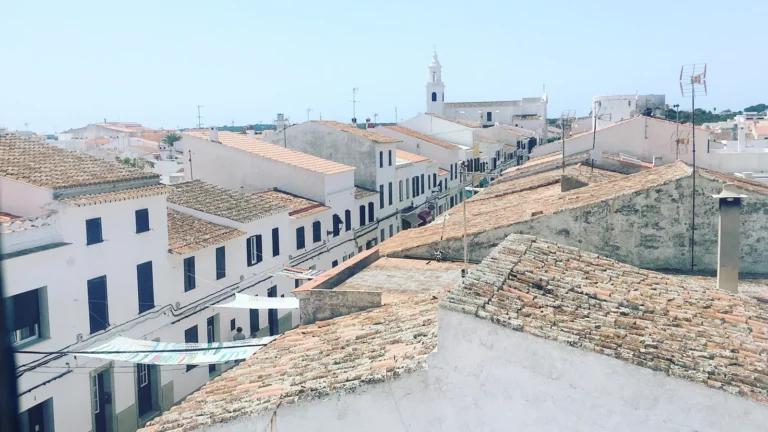
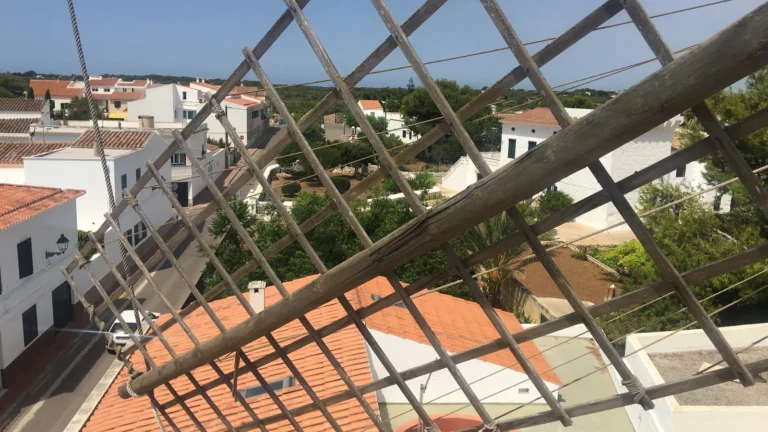
If access is available during your visit, look out for the internal staircase and upper part of the mill, the views towards Sant Lluís from higher up in the building are stunning.
From above, you get a different perspective on the town and its characteristic layout. Sant Lluís itself is interesting because its streets reflect its planned 18th-century origins rather than the medieval maze you might associate with some other Menorcan settlements.
How to Get to Es Molí de Dalt?
By car
Driving is the easiest option if you are exploring southeastern Menorca.
There is no visitor car park but a public car park nearby along Carrer del Duc de Crillon is just a 5 minutes walk away. There’s also the option of on-street parking in Sant Lluís. We’d recommend using the street Carrer son Parruquet,
By bus
Sant Lluís is connected with Maó by bus services and nearby coastal resorts, check the current timetable before travelling.
Visitor information
- Location: Sant Lluís, southeastern Menorca
- Date: Built in 1762
- Best for: History lovers, photographers, families and anyone exploring Sant Lluís
- Visit length: Allow around 30–60 minutes
- Parking: Public parking nearby
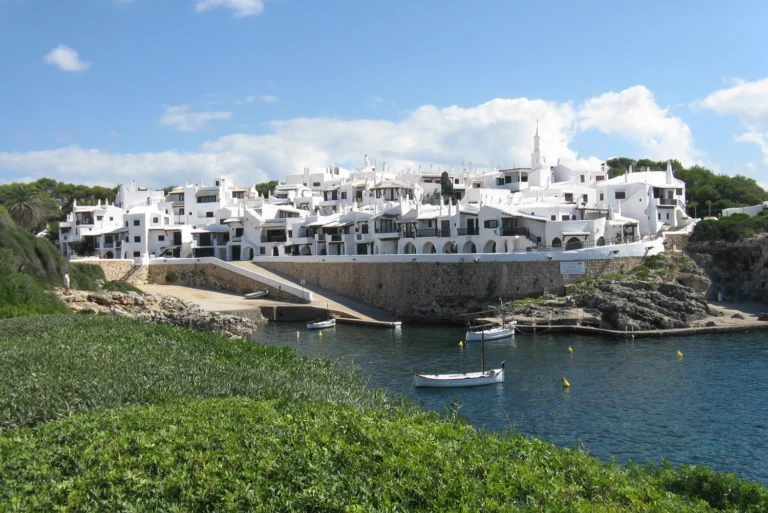
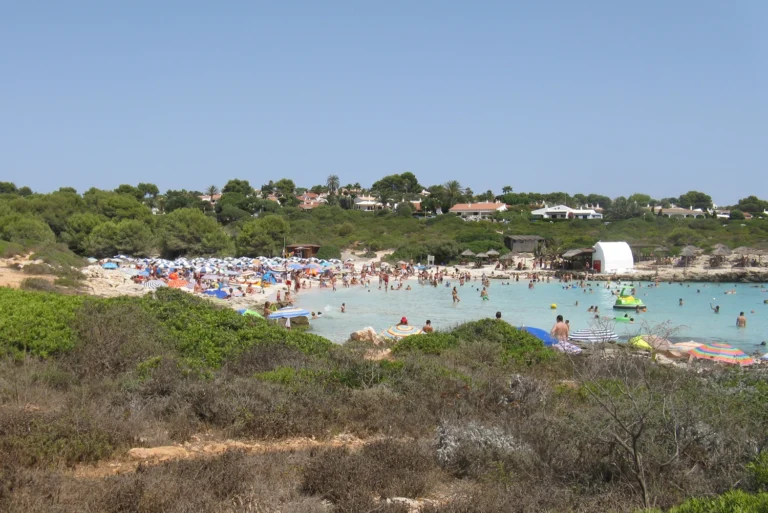
- Nearby resorts: Binibeca, Binisafúller, Punta Prima and S’Algar
- Opening times: Monday–Saturday, 10:00–13:00 and 18:00–20:00
- Entry price: Free
Contact details
- Address: Carrer de Sant Lluís, 4, Sant Lluís, Menorca
- Tel: +34 971 151 0842
- Email: moli@ajsantlluis.org
- Website: Ajuntament de Sant Lluís