Mahón Port is the large natural harbour on the east coast of Menorca, below the historic town of Maó. The harbour combines waterfront promenades and marinas with working port facilities, small islands, historic fortifications, ferry and cruise facilities, and restaurants.
There is more to Mahón Port than a single waterfront attraction. The harbour stretches for more than six kilometres, so how you experience it depends on how much time you have. A short visit can focus on the waterfront and old town, while a longer visit allows time for a harbour cruise, Illa del Rei or one of the historic fortifications.
For most visitors, the best way to explore the port is to choose one or two highlights rather than trying to see everything. Allow around two to three hours for a straightforward visit, or half a day if you want to add a boat trip or another major attraction.
Mahón Port is particularly suited to visitors interested in scenery, maritime history, walking, food and boat trips. Bear in mind that reaching the old town from the waterfront involves hills and stairs, so the amount you can comfortably see will depend partly on your mobility and how you want to spend your time.

What is Mahón Port actually like?
The first thing to understand is the geography. Maó’s historic centre sits above the southern side of the harbour, while the waterfront lies below. The harbour then extends eastwards towards its entrance, with places such as Es Castell, Cales Fonts, Illa del Rei, Lazareto and La Mola occupying different parts of the wider harbour landscape.
Mahón Harbour stretches for around 5 km, reaches roughly 1.2 km at its widest and has depths of up to about 30 metres in places. Its combination of size, shelter and navigable water helps explain its long importance as a commercial and naval harbour.
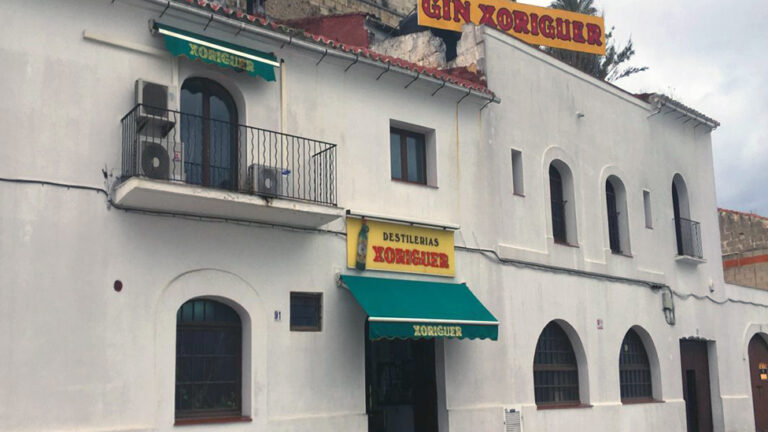
At the western end, the harbour becomes quieter and more functional, centred on Sa Colàrsega and recreational boating rather than major visitor attractions. This is also where the harbour connects with the Camí de Cavalls route towards Es Grau. For most visitors, there is little reason to make a special trip to the very end of the harbour, although walkers, boating enthusiasts and anyone visiting the Xoriguer Gin Distillery may have more reason to explore this side.
So this is not a compact marina that you can explore completely in an hour. At water level, the experience is maritime and relatively relaxed: boats, yachts, waterfront businesses and views along the sheltered inlet. Above it, Maó has the character of a historic Mediterranean town, with streets, viewpoints, markets and buildings reflecting its long strategic history.
The harbour is also a working port rather than a purely tourist attraction. Ferries, cruise ships, commercial activity and leisure boats share the same broad waterway. That combination is part of the appeal: Mahón Port feels like a real harbour that happens to contain an extraordinary amount of history.
The distinction is useful when deciding what to do. The central waterfront, Maó’s old town and some harbour attractions can be combined relatively easily; other sites are geographically separate and should be treated as individual excursions.

A short history of Mahón Port

The harbour’s history is inseparable from its geography. Its deep, sheltered shape made it a valuable refuge for ships long before modern tourism existed, while its strategic position made Menorca a contested possession of larger Mediterranean powers.
The 18th century is particularly visible in today’s landscape. British, French and Spanish control left military buildings, roads, architecture and other traces around Maó and the harbour. Fort Marlborough, Sant Felip and the later La Mola complex all reflect the strategic importance of controlling access to the port.
The harbour’s naval importance is especially clear from the 18th century. A British naval base was established in 1708, followed by stores and other infrastructure. From the 1760s, the British expanded the dockyard around what is now Illa Pinto, adding large buildings and quays. The Royal Navy used Port Mahon as a major Mediterranean base, while the naval hospital on Illa del Rei formed another part of the same maritime system.
The story did not end with British rule. After Spain regained Menorca, the arsenal was expanded into Sa Vinyeta and reached a particularly active phase between 1782 and 1798 as a base for supplying, building and repairing ships. The Spanish Armada’s history also records later naval uses, including torpedo facilities, submarine-defence material and 20th-century naval-base infrastructure. The modern Comandancia Naval de Mahón remains part of Spain’s Sector Naval de Baleares.
For visitors, the useful distinction is between the harbour as a historic naval landscape and the modern military installations themselves. Much of the surviving evidence is something to look at and understand from public viewpoints or from the water rather than a collection of buildings that can simply be entered.
The British legacy should not, however, be reduced to a single uninterrupted period of rule. Menorca experienced separate British periods between 1708 and 1802, alongside French and Spanish control.That complicated history is one reason the harbour feels different from a conventional resort waterfront. Military sites, historic buildings, working maritime infrastructure and modern visitor attractions exist within the same landscape.
The best things to do around Mahón Port
The best way to approach Mahón Port is to choose a small number of experiences rather than trying to cover the whole harbour. The options below are deliberately arranged to distinguish the central waterfront and Maó from attractions around the wider harbour.
Take a stroll along the waterfront
For a first visit, the waterfront is the simplest place to start. Walking along the harbour gives you a sense of its scale that is difficult to appreciate from a map, while also showing the relationship between the water, the town above and the boats moving through the harbour.
There is more to the promenade than the views. Along the waterfront you’ll find restaurants and tapas bars, cafés, ice cream shops and boutiques selling jewellery, leather goods and souvenirs. The marinas add another dimension to the scene, with everything from small leisure craft and speedboats to luxury yachts moored in the marina. The Xoriguer Gin Distillery is also on the waterfront, offering an opportunity to discover one of Menorca’s best-known local products.
The waterfront is particularly appealing when you simply want to enjoy Mahón’s harbour atmosphere rather than follow a fixed sightseeing route. You can pause for coffee, watch the boats, browse the shops or stop for lunch while still having the harbour as the backdrop. Casino Marítimo is another recognisable part of the waterfront scene.
It can work particularly well for families or cruise passengers who do not want to commit to a longer excursion. You can stay at harbour level rather than immediately tackling the climb into Maó.
The limitation is that the waterfront is not uniformly packed with attractions. Some sections are more interesting for scenery and atmosphere than sightseeing, and the sheer size of the harbour means that walking its entire length is not a sensible objective for most visitors.
See the harbour from the water
A boat trip is one of the most effective ways to understand the scale and geography of Mahón Port. The harbour stretches well beyond the central waterfront, with islands, historic sites and different landing points around its shoreline.
Yellow Catamarans offers harbour excursions from Maó, giving visitors the opportunity to see the port’s islands, fortifications and historic sites from the water. Depending on the route, you may see sights including La Mola, Lazareto, Sant Felip, Es Castell and Illa del Rei. See our Yellow Catamarans guide for more information about the harbour trip and what to expect.
The Port Authority’s public boarding map illustrates how spread out the harbour is, with landing points around the shoreline and access to places such as Illa del Rei. This is useful context when deciding whether a short boat trip or a longer harbour excursion fits your day.
For a visitor with only a few hours, a boat trip can be more efficient than trying to reach several distant points independently. It also provides a perspective on the harbour that a waterfront walk cannot.
Boat trips are seasonal and operator-dependent, however. Check the current timetable and route before making one the centrepiece of your day.

Explore Maó’s old town
Mahón Port and Mahón Old Town are closely connected, but they are two different parts of the city. The port occupies the waterfront below the city, while the historic centre of Mahón sits on higher ground above the harbour.
From the waterfront, Maó rises above you, and reaching the historic centre brings harbour views together with historic streets, architecture, food markets and cultural attractions. You can walk up from the port using the steps, or use the lift if you prefer to avoid the climb. Walking up gives you a different perspective of the harbour, while the lift provides an easier way to reach the old town.
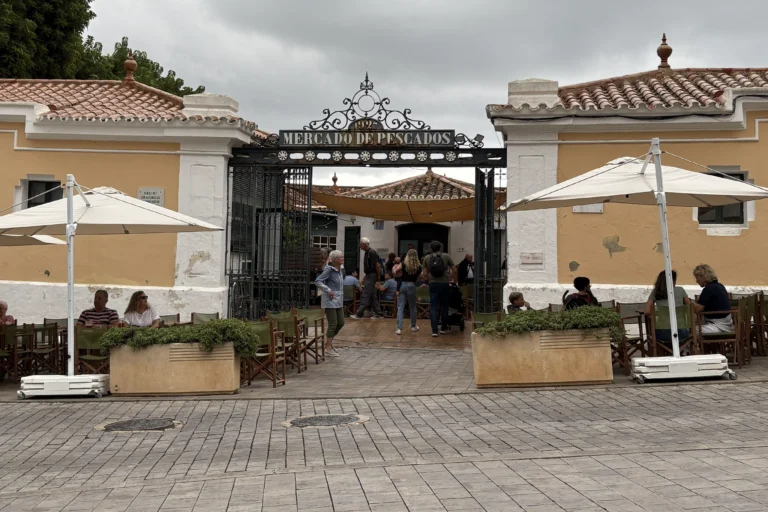
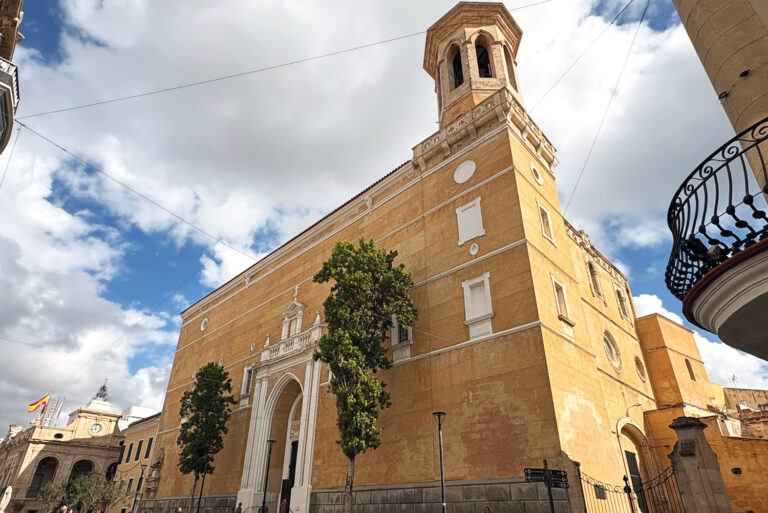
The Mahón Fish Market is a useful stop if food is part of your plan, while the Museu de Menorca provides more cultural depth for visitors interested in the island’s history. The Church of Santa Maria and Church of Nostra Senyora del Carme are also worth considering if you are interested in Maó’s religious and architectural heritage.
The old town also helps explain why the harbour became so strategically important. Menorca’s position in the western Mediterranean repeatedly made Maó a prize for competing powers, leaving a substantial military and architectural legacy around the harbour.
If you want to explore Mahón beyond the harbour, see our Guide to Mahon, which covers Maó’s historic centre, sights and practical information in more detail.
Visit Illa del Rei (King’s Island)
Illa del Rei is one of the small islands within Mahón Harbour and one of the more distinctive places to visit from the water. The island is home to the former military hospital complex, while its history goes back considerably further.
Among the island’s significant archaeological remains are those of a Palaeo-Christian basilica dating from around the fifth or sixth century. The site includes surviving sections of mosaic flooring and a baptismal font, adding another layer of history to an island better known today for its former hospital and contemporary cultural use.
Hauser & Wirth Menorca occupies part of the island, combining contemporary art, gardens and cultural programming with the historic setting. Its current 2026 information lists free gallery admission and daily opening, while the shuttle-boat arrangements are handled separately.
Illa del Rei works particularly well for travellers who want something more substantial than a harbour walk but do not want to spend the whole day visiting military sites. Allow extra time for the boat connection and check the current shuttle arrangements before travelling; the island is not simply a walk-up extension of the waterfront.
The island’s international profile was underlined in September 2026 when former US First Lady Michelle Obama visited Illa del Rei during a private stay in Menorca. She spent around two hours at Hauser & Wirth, viewing the “Directionless” exhibition and visiting parts of the former naval hospital. The visit neatly illustrates the unusual combination of contemporary art and British naval heritage that now defines this small island within Mahón Harbour.
Beyond the central waterfront, several historic sites around the wider harbour are worth considering if you have more time. They are not part of a single walkable attraction and are better approached individually by boat, bus, taxi or organised excursion.

Explore the harbour’s military and naval history
The harbour’s strategic importance is written into the landscape. At the entrance and around its shores are several major defensive and naval sites, including La Mola, Fort Marlborough, Sant Felip, Lazareto and the former naval dockyard around Illa Pinto. They are not all directly beside the central waterfront, so they should be treated as excursions rather than items on a short harbour stroll.
La Mola
La Mola, meanwhile, occupies the northern side of the harbour entrance and is a much larger military complex. Its location also makes it an excellent choice for travellers interested in the harbour as a landscape rather than simply as a town waterfront. See our La Mola Fortress guide for more detail on the fortress and what to expect from a visit.
It is not a natural extension of a short walk around Maó. Reaching La Mola requires additional time and planning, so it is better treated as a separate excursion.

Fort Marlborough
Fort Marlborough is at Cala de Sant Esteve near Es Castell and was built by the British in the early 18th century. Its location makes it a separate excursion from the central waterfront rather than something to add casually to a short harbour walk.
The fort is particularly relevant if you are interested in Mahón’s British military history and want to see how the harbour was defended from the eastern approaches.
See our Fort Marlborough guide for more information about the fort and what to expect from a visit.

Illa Pinto and the former naval dockyard
Illa Pinto, on the north side of the harbour, is one of the most important surviving pieces of Mahón’s naval history. A British naval base was established in 1708, and from the 1760s the small island was levelled and enlarged, with substantial buildings and a roughly hexagonal arrangement of quays. The Spanish Armada records that large buildings from this period survive today. The island later formed part of the Spanish naval arsenal and continued in military use.
This is not a sightseeing attraction, and access to the naval area is not permitted. It is best appreciated from the harbour, where its buildings and former dockyard layout help explain why Mahón became such an important naval base.

Isla Plana and Lazareto: Mahón’s quarantine islands
The small Isla Plana, also known as the Island of Quarantine, adds another layer to the harbour’s history. It was used in Mahón’s earlier quarantine arrangements before the much larger Lazareto was developed nearby. The two should not be treated as the same place: Isla Plana was the earlier, smaller quarantine site, while Lazareto became the purpose-built complex for maritime quarantine.
Isla Plana is not a visitor attraction. Its value for travellers is mainly historical and geographical, particularly when seen from the water alongside Lazareto. Official port documentation identifies it as the former Isla de la Cuarentena and, today, an area associated with naval/maritime use.
Lazareto is another of the harbour’s unusual historical sites. The island was used as a quarantine facility for ships and travellers and was developed around the turn of the 19th century. Menorca’s tourism authority describes it as the first lazaretto in Spain; the last quarantined ship arrived there in 1919.


Golden Farm and the Nelson legend
On the northern side of the harbour, the Sant Antoni estate is better known by its English name, Golden Farm, or The Nelson’s House. Admiral Horatio Nelson is documented as having stayed there during his visit to Menorca in October 1799.
The house is also associated with the story that Nelson and Lady Emma Hamilton had a romantic encounter there. That part belongs to local legend rather than established history: the documented connection is Nelson’s stay, while there is no reliable evidence that Lady Hamilton visited Menorca.
Golden Farm is therefore best understood as a historical landmark within the wider harbour landscape rather than a conventional sightseeing attraction. Its position on the northern shore makes it particularly interesting to look for from the water.
The north shore also has its curiosities, including the small waterfront house known as Casa Venècia, which was formerly associated with Richard Branson and his family. It is a point of interest rather than a visitor attraction in its own right, and is best understood as part of the wider harbour landscape.
The harbour has even provided the stage for the RAF Red Arrows. The British aerobatic team performed over Mahón Harbour several times between 2011 and 2014, including displays connected with celebrations of the historic British naval hospital on Illa del Rei. The sight of the red, white and blue vapour trails above the harbour became a memorable part of Menorca’s modern British connection.
Events at Mahón Port
Mahón Harbour is also a setting for a regular programme of maritime and cultural events, particularly during the summer. The best-established sailing fixtures include the Menorca-Sant Joan regatta, held annually in June, and the Copa del Rey de Barcos de Época, the classic-yacht regatta that takes place in late summer. Both are long-running events organised around the Club Marítimo de Mahón.
The harbour also becomes a focus for local celebrations and summer entertainment. Recent Estiu al Port programmes have included traditional Latin sailing, live music, art, dance, children’s activities, evening markets and other events along the waterfront, while Sant Pere brings traditional maritime festivities directly into the port.
For visitors, the sailing events can be particularly interesting because they make the harbour feel very different from an ordinary sightseeing day. The Menorca-Sant Joan programme includes a competitive sailing race inside the harbour, while the classic-yacht fleet of the Copa del Rey can provide an opportunity to see historic sailing boats in and around the port.
If you are visiting specifically for an event, check the current programme before travelling. Dates and individual activities can change from year to year.
How to get to Mahón Port
Please note a car is not essential for the core Maó-and-waterfront experience. It becomes more useful if you want to visit dispersed attractions around the harbour or combine Maó with other parts of Menorca. For a visit centred on the waterfront, old town and a boat trip, public transport, taxi or an organised excursion can be simpler than finding parking.
From Menorca Airport by Bus
The simplest public-transport connection is Aena’s Line 10, which links Menorca Airport with Mahón’s bus station. Aena currently lists a single fare of €2.80. From 1 June to 30 September, services to Mahón run from 5:55am to 12:15am, with frequencies varying through the day; the winter timetable is shorter.
The airport bus reaches the bus station rather than every point on the waterfront. From there, your onward journey depends on which part of Maó or the harbour you want to reach.
From Cuitadella by Bus
From Plaça de la Pau in Ciutadella take Bus Line 1 to Mahón’s bus station. Operated by TMSA buses, the journey is about 1 hour and cost is €5.75 (2026 prices). Please note buses do not accept card payment, cash only.
From Cuitadella by Car
From Ciutadella take the Me-1 road East across the island to Mahon, it’s a 45 km / 60 minutes journey bypassing the towns of Ferreries, Es Mercadal and Alaior.
If you need to a rental car we would recommend reading our guide Hiring a Car in Menorca.
By Ferry
Maó is a ferry port as well as a visitor destination, so ferry passengers should distinguish between arriving in Menorca at the port and sightseeing around the harbour. Ferry operators, terminals and schedules can change, so check your individual operator for the current sailing, terminal and check-in requirements.
How long do you need at Mahón Port?
There is no single “correct” length of visit. A useful way to plan is to match the harbour to the time available.
If you have 1–2 hours
Keep the itinerary compact:
- Walk part of the waterfront.
- Enjoy the harbour views.
- Go up into Maó if you want a quick look at the old town.
- top for a drink or snack.
This is particularly practical for a cruise passenger or anyone fitting Maó into a wider Menorca itinerary.
If you have half a day
A good balance is waterfront + old town + one major experience. That experience could be a harbour boat trip, Illa del Rei, a food-focused visit to Maó or a cultural attraction.
Avoid trying to combine several distant fortifications simply because they appear together on a map.
If you have a full day
You have enough time to combine Maó with one wider harbour excursion.
For example, you could spend the morning exploring the old town, have lunch around Maó or the waterfront, then devote the afternoon to Illa del Rei, La Mola, Fort Marlborough or Es Castell.
If you’re visiting on a cruise
Treat the ship’s departure time as a hard deadline. Berth arrangements and transport requirements can vary, and an attraction that looks close on a map may not be close in practical terms. Allow a generous return buffer and confirm your ship’s berth and local arrangements on the day.
For a short cruise call, staying around Maó and the immediately accessible waterfront is generally easier to manage than attempting several widely separated harbour attractions.
Food and drink around Mahón Port
Food is one of the easiest ways to combine the waterfront with the upper town. At harbour level, restaurants and terraces make it possible to stay close to the water, while Maó provides a wider choice of cafés, bars and restaurants.
The [Mahón Fish Market] offers a more market-oriented setting, with seafood, tapas and local produce. It can be a useful stop when combining the old town with the harbour rather than treating food as a separate excursion.
Menorca’s food and drink also provide a connection to the island’s identity: local cheese, seafood and gin all feature in the wider Maó experience. Xoriguer’s distillery is located on the harbour waterfront at Muelle de Ponent and can be considered as a short cultural or food-and-drink stop.
Restaurant opening hours and individual menus are best checked directly rather than relying on generic destination guides, particularly outside the main summer season.

What can you visit near Mahón Port?
The following table is designed to show the geographical relationship between the main places rather than suggest that they form one walkable sightseeing route.
|
Place |
Where it fits |
Best for |
Time needed |
|---|---|---|---|
|
Illa Pinto |
North side of the harbour |
Naval history, harbour geography |
View from water / public viewpoints |
|
Maó old town |
Above the waterfront |
Architecture, food, culture |
Flexible |
|
Isla Plana |
Near the Lazareto |
Quarantine and naval history |
View from water; not a standard visitor attraction |
|
Illa del Rei |
Island within the harbour |
Art, gardens, history |
Half-day component |
|
Lazareto |
Island within the harbour |
Quarantine history |
Seasonal visit |
|
Fort Marlborough |
Near the harbour entrance at Es Castell |
Military history |
Longer excursion |
|
La Mola |
Northern side of the harbour entrance |
Fortifications, views |
Longer excursion |
|
Es Castell / Cales Fonts |
Eastern harbour area |
Waterfront atmosphere, food |
Half-day option |
|
Xoriguer |
Harbour waterfront |
Menorcan gin |
Short stop |

Quick visitor information
Best for: Harbour scenery, history, independent sightseeing, couples, families and cruise passengers with time to explore.
Car needed? No for exploring Mahón and the waterfront. A car becomes more useful for visiting attractions further afield.
Public transport: Yes. Mahón is connected to the airport and other parts of Menorca by bus, although reaching specific parts of the waterfront may require a walk or local connection.
Boat trips: One of the best ways to appreciate the scale and history of the harbour. Availability is seasonal and operator-specific, so check current times and booking arrangements before travelling.
Accessibility: The waterfront and upper town are connected by a lift as well as stairs, although accessibility varies by route and attraction. Check current arrangements before travelling.