
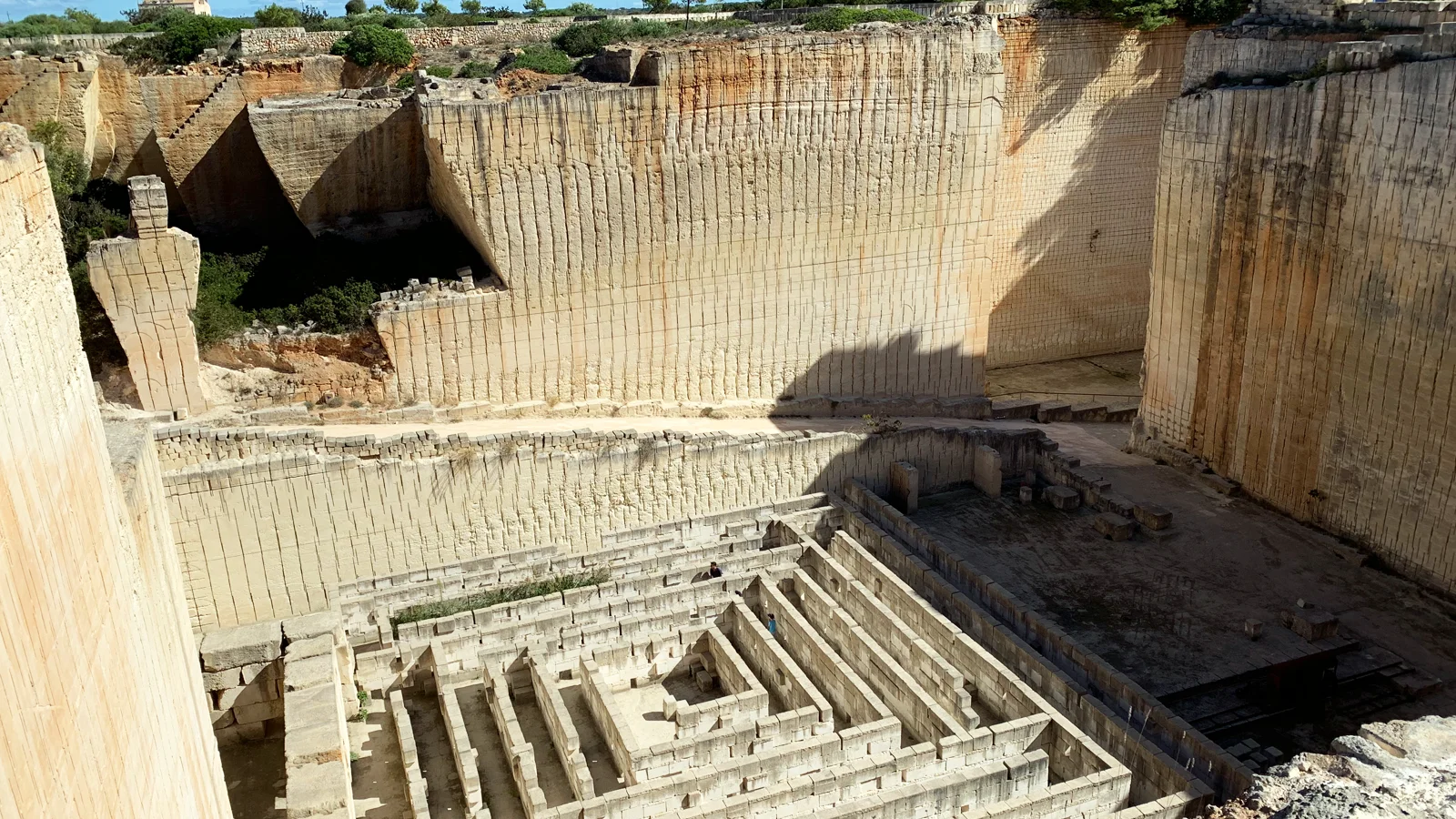
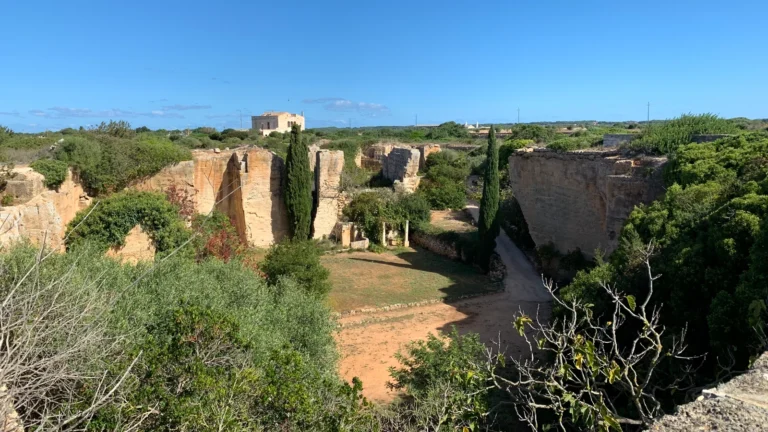
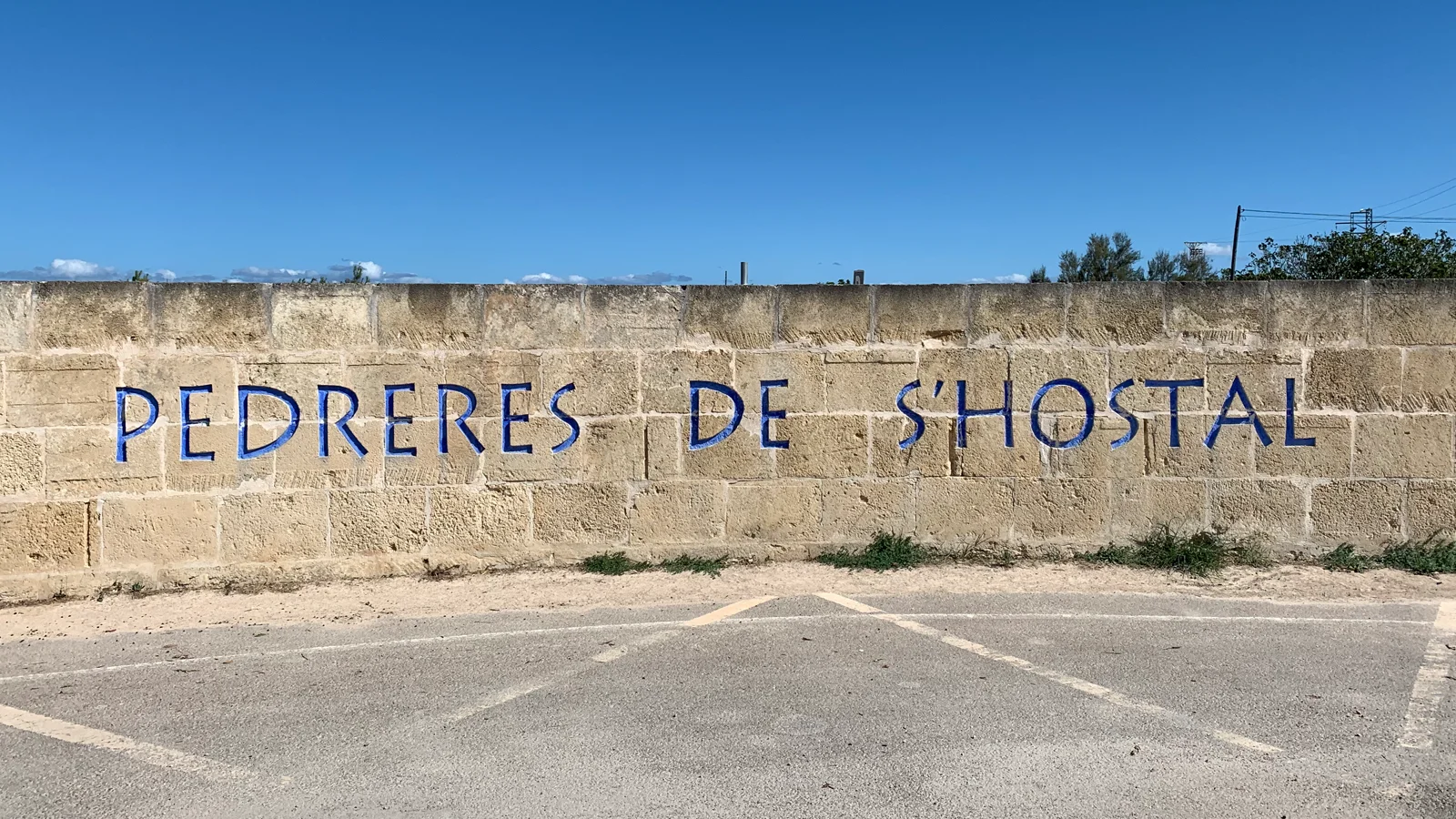
Just outside Ciutadella, the former Pedreres de s’Hostal quarries offer a very different side of Menorca. Instead of a conventional monument or natural attraction, Líthica combines enormous excavated stone spaces with gardens, labyrinths, native vegetation and cultural activities.
The quarries were worked for marès, the pale calcareous stone traditionally used for construction across Menorca. Extraction ended in 1994, after which Líthica developed the site as a cultural landscape rather than allowing the quarry to disappear beneath rubble or be treated simply as an abandoned industrial site.
We visited Líthica as a family in September 2025, travelling by car from Binibeca. We arrived just after midday and spent approximately two hours exploring the quarries, gardens and labyrinth. For us, that felt like the perfect amount of time to see everything without rushing.
So, is Líthica worth visiting? For travellers interested in unusual landscapes, heritage, gardens, architecture, photography or industrial archaeology, yes. The attraction is less conventional than a museum or historic monument, and its uneven quarry terrain means it is worth understanding what the visit involves before you go.
What you’ll see at Lithica
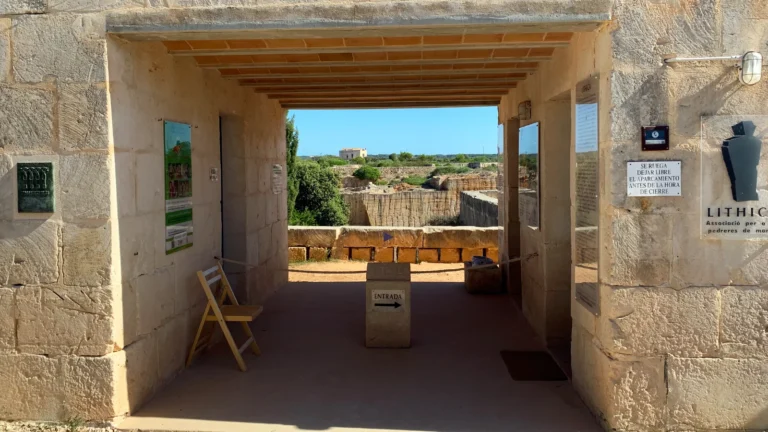
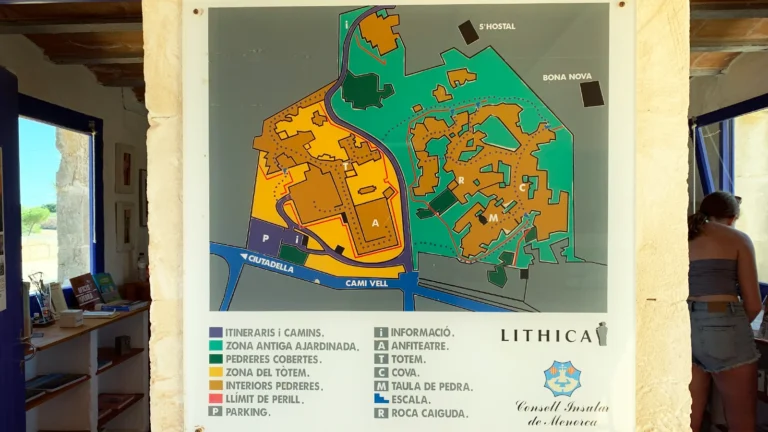
Líthica is easiest to understand as a former quarry landscape that has been given a second life through gardens, labyrinths, botanical conservation and cultural interpretation.
The site is not simply an old quarry with a few gardens added around it. The gardens have been created within the spaces left by quarrying, while the enormous stone excavations remain the defining feature of the landscape. There are several distinct things to see, and understanding how they relate to one another makes the visit much easier to appreciate.
The historic quarries
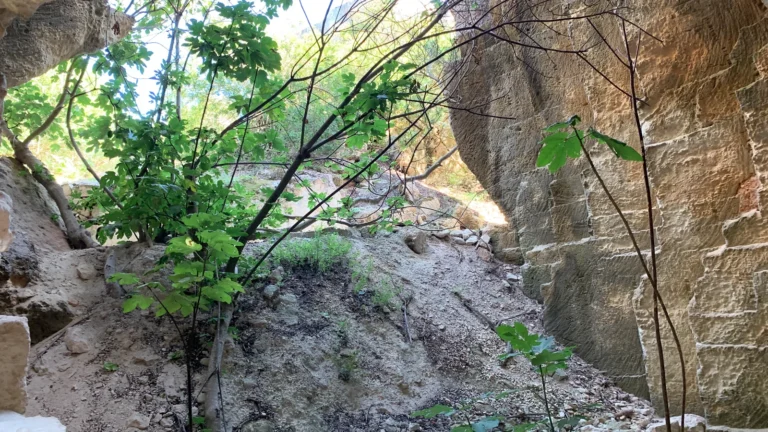
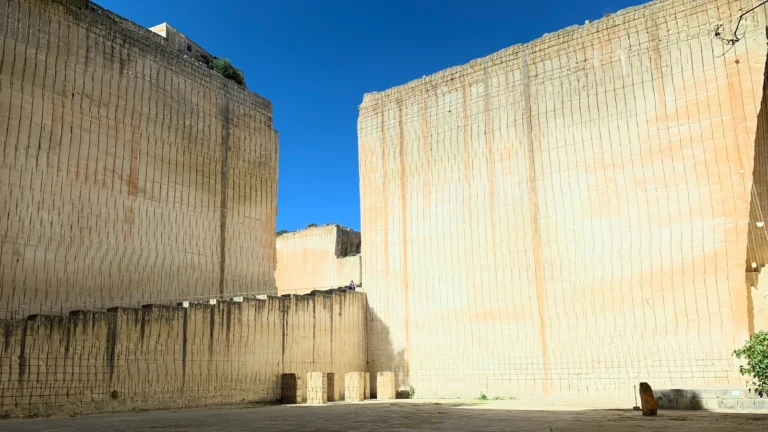
The quarries themselves are the starting point. The site contains older areas worked by hand and much larger spaces created by mechanical extraction. The older walls are irregular and reflect traditional quarrying; the later mechanical areas are straighter, deeper and more geometric.
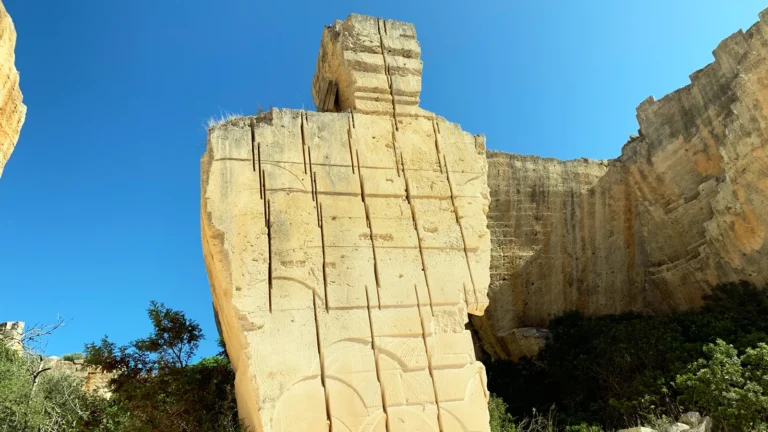
Look for places where the two histories meet. Features such as the Totem preserve the physical relationship between older hand extraction and later mechanical quarrying.
The Orchards Labyrinth
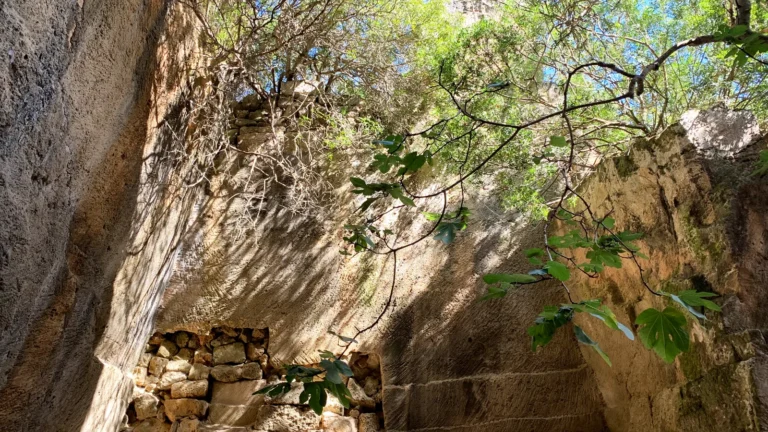
The relationship between quarrying and gardening at Líthica goes back further than the modern restoration. Once quarry spaces were no longer being worked, some were reused as vegetable gardens and orchards, taking advantage of their sheltered conditions and protection from the tramuntana wind.
When these gardens were later abandoned, native vegetation gradually returned, mixing with surviving cultivated plants such as olive, carob, fig and almond.
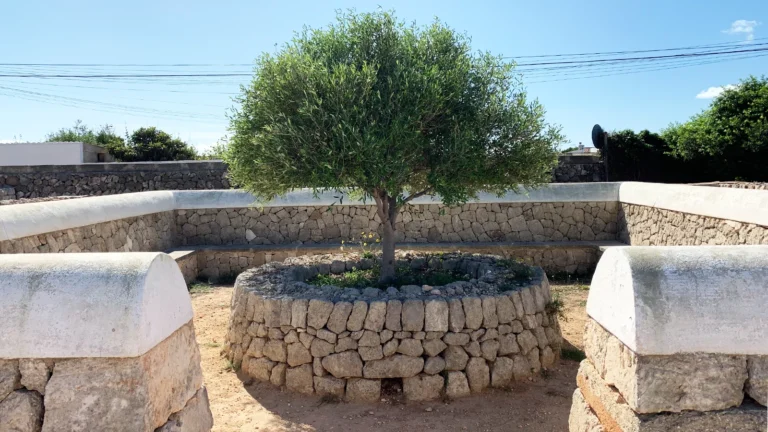
The Orchards Labyrinth is the wider garden project and includes three distinct areas: the Medieval Garden, Plant Labyrinth and Botanical Circuit.
The Medieval Garden
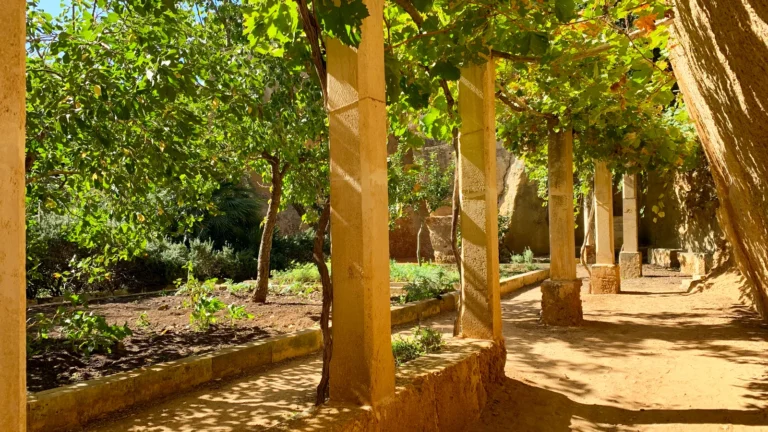
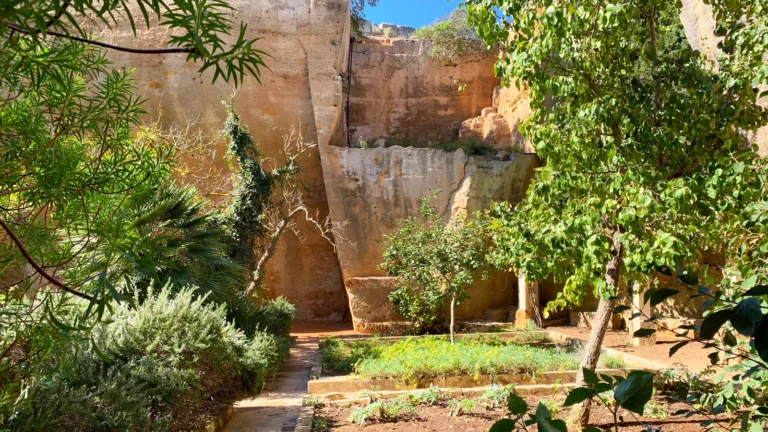
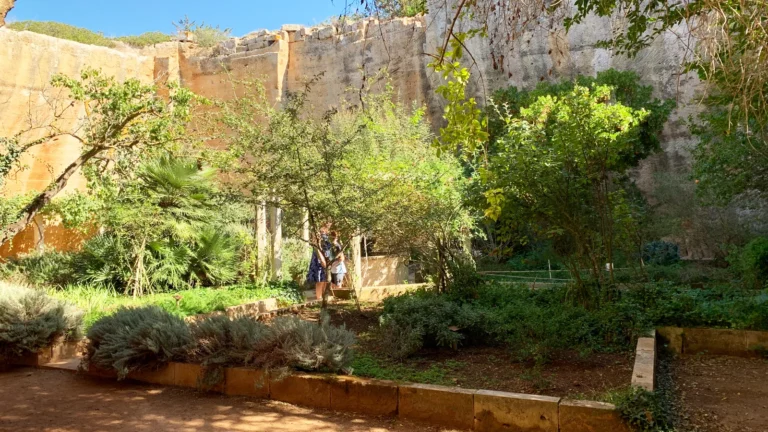
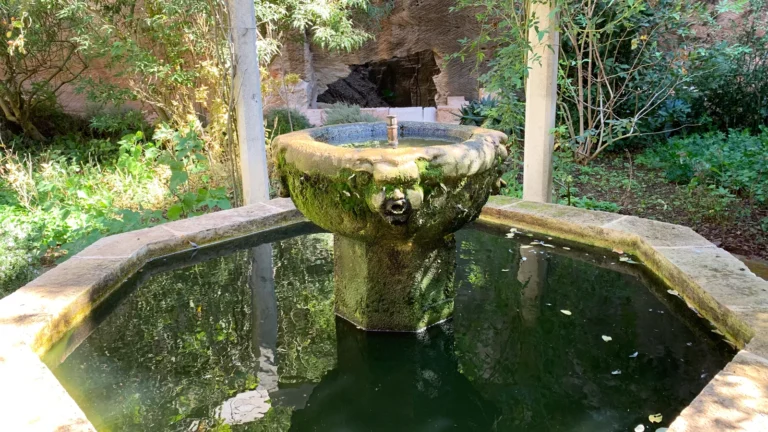
The Medieval Garden is designed as an enclosed orchard or cloister, inspired by the idea of a secluded garden and the geometric order of a medieval monastery.
At its centre is a fountain surrounded by roses, symbolising life and the soul. Around it, the garden is divided into different areas: a medicinal herb garden, representing the mind and our understanding of nature, and an orchard, representing the body and the food that sustains us.
The garden is also intended to appeal to the senses. The sound of the water, the fragrance of the herbs and flowers, and the opportunity to touch the plants are all part of the experience.
The Plant Labyrinth
The Plant Labyrinth is a circular, single-path labyrinth inspired by the traditional Cretan labyrinth. Instead of high stone walls, it is formed from aromatic plants, making it a slower and more sensory experience.
Líthica describes it as approximately 15 metres in diameter, with a 140-metre path and 18 indigenous plant species. Unlike the Mineral Labyrinth, it is not a maze with alternative routes; the experience is following one winding path through the vegetation.
The Botanical Circuit
The Botanical Circuit / Gardens are another element of the Orchards Labyrinth, but its focus is specifically the conservation and display of Menorca’s native flora. The route passes through 9 different restored quarry spaces, ranging from wild olive and almond trees to Mediterranean scrub, wetlands and a plant nursery:
- Wild Olive Tree Quarry (Pedrera de s’Ullastre) – The presentation area for the Botanical Circuit.
- Almond Quarry (Pedrera des Ametllers) – Almond trees combined with spring Mediterranean meadow vegetation.
- Olive Quarry (Pedrera de ses Oliveres) – Cultivated olive trees and aromatic plants, together with plants adapted to rocky coastal environments, including species associated with dunes and beaches, including tamarisk, chamomile and rosemary.
- Carob Quarry (Pedrera Comunitat Oleo-ceratonia) – Mediterranean woodland featuring drought-resistant evergreen vegetation, including wild olive and carob.
- Coppice Quarry (Pedrera des Bosquet) – A denser, more shaded community of bushes, thickets and climbers, including mastic, myrtle and boxwood.
- Hawthorn Quarry (Pedrera de s’Espinal) – A collection of Mediterranean plants of particular interest, including species endemic to Menorca.
- Lemon Trees Quarry (Pedrera des Llimoners) – An area dedicated to lemon trees at the end of the botanical circuit.
- Pond (Estany) – A wetter environment supporting marshland and riverside species.
- Nursery (Viver) – A restricted-access area used for the production of indigenous plants.
Rather than simply planting attractive gardens among old quarry walls, Líthica uses different excavated spaces to create conditions for different plant communities.
The Mineral Labyrinth
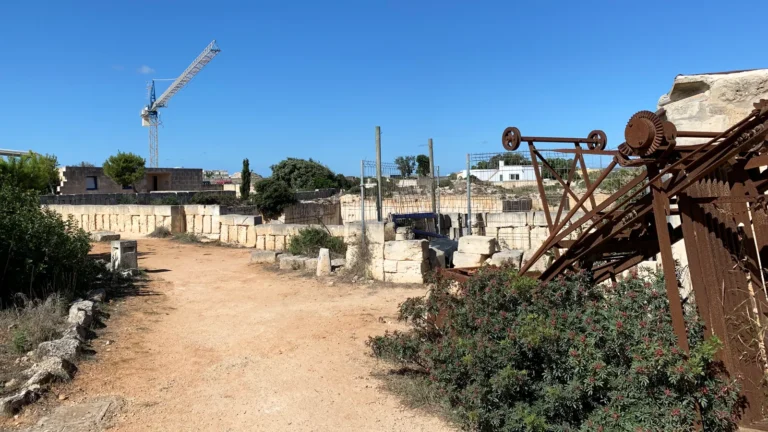
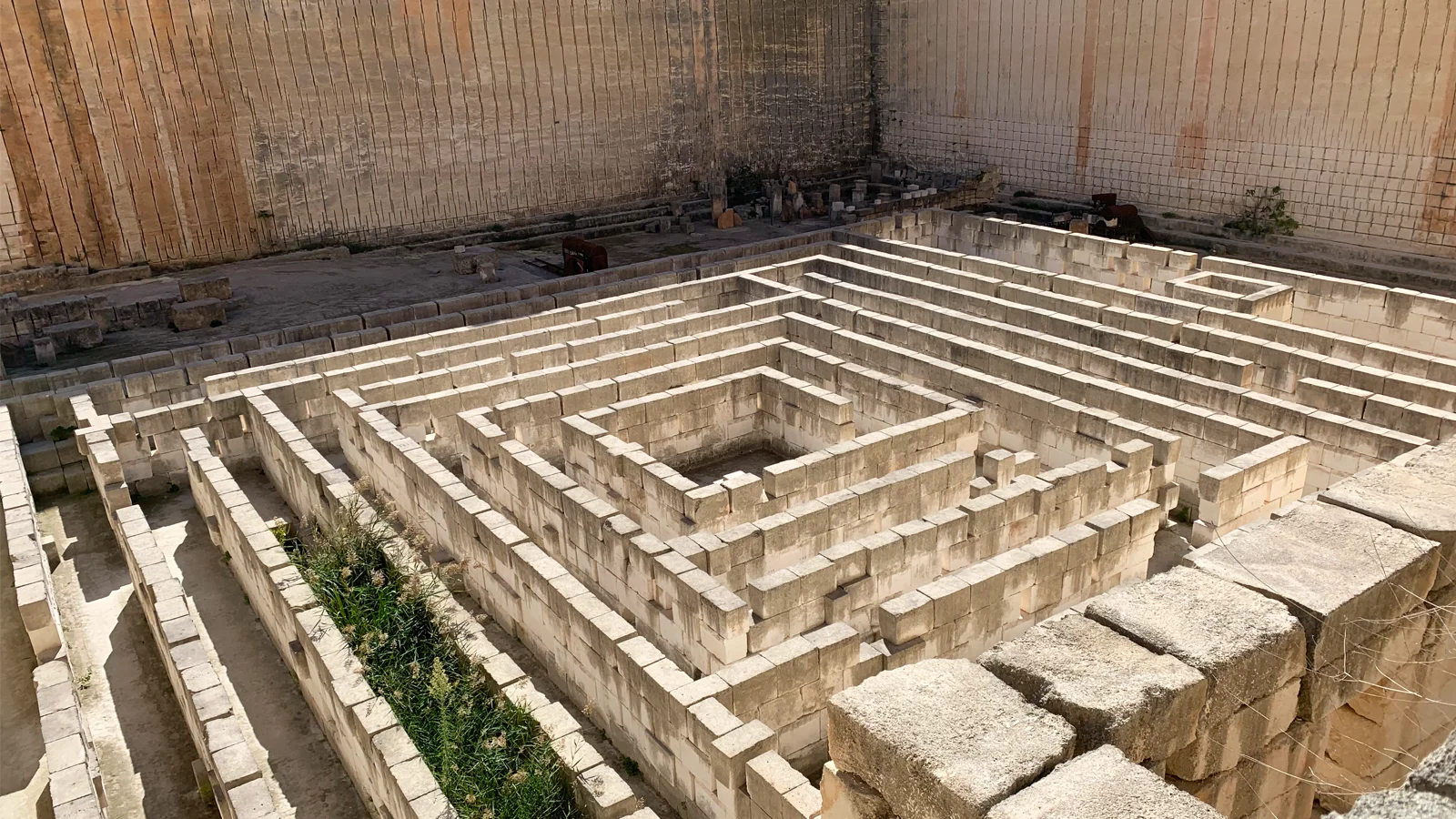
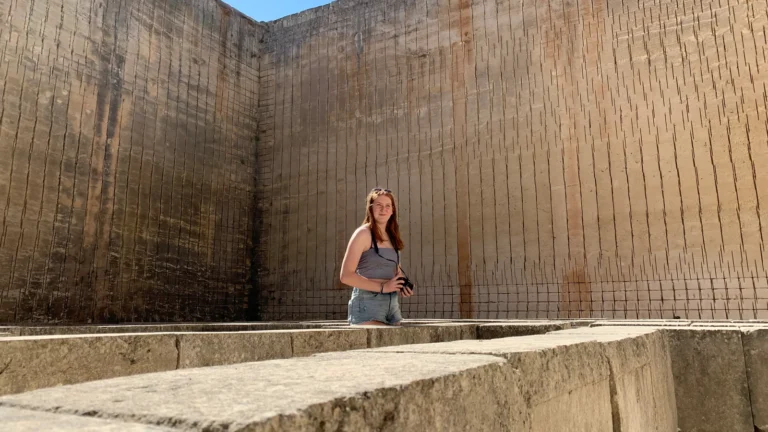
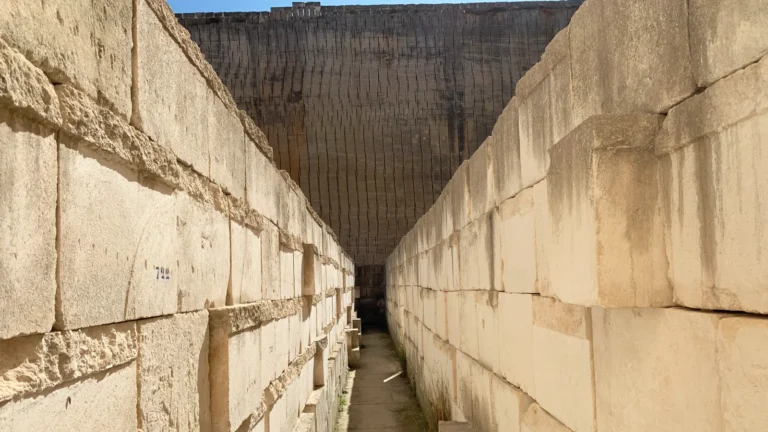
The Mineral Labyrinth is separate from the Orchards Labyrinth’s Medieval Garden, Plant Labyrinth and Botanical Circuit. It lies within the mechanical quarry and is a much more monumental piece of contemporary land art.
Built from marès blocks using traditional dry-stone techniques, it creates a deliberate contrast with the huge mechanically cut quarry spaces around it. The project effectively puts stone back into a landscape that was created by removing stone.
Wildlife
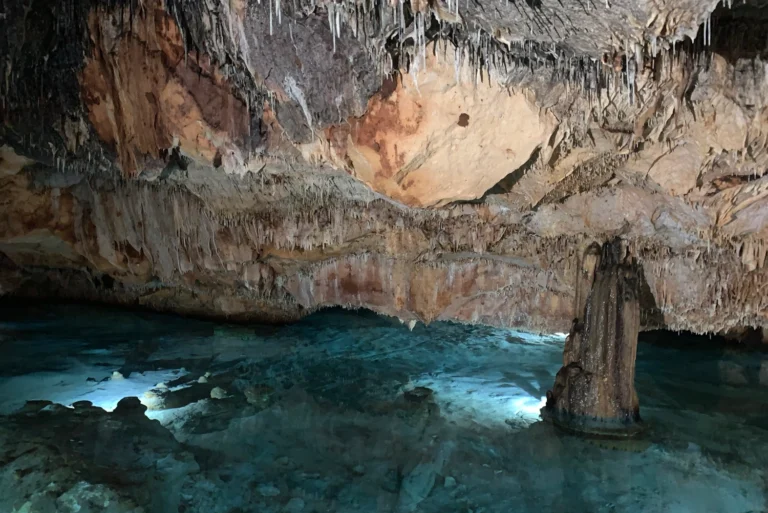
The quarry walls and cavities have also become habitat for wildlife, particularly birds that nest in rocky environments. Kestrels (Falco tinnunculus) have been monitored at s’Hostal since 2003, with Líthica working with the Institut Menorquí d’Estudis to study their breeding, movements and population.
The quarries support several other bird species too, while the surrounding gardens and vegetation provide additional food and shelter. Look upwards as you explore the site — the high quarry faces are part of a living landscape as well as a reminder of its industrial past.
Dry-stone craftsmanship
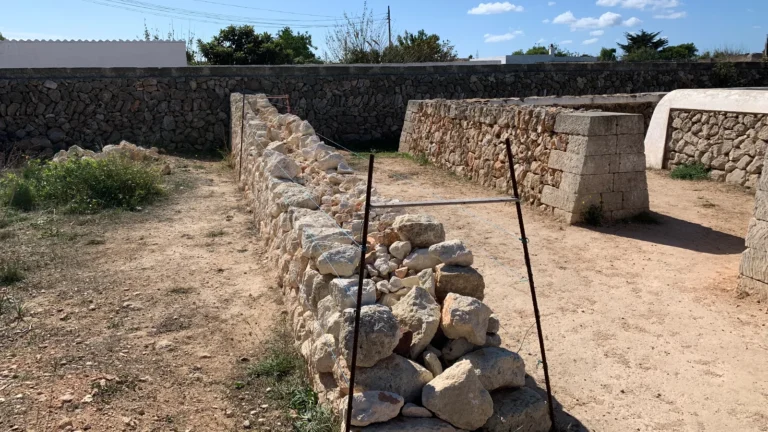
One of the quieter but more interesting features at Líthica is its Espai de Paret Seca — the Dry-Stone Wall Space. Here, traditional Menorcan dry-stone construction is presented almost as an open-air catalogue, with different sections demonstrating local variations in materials, wall faces, coping stones, corners and gateways.
The display includes recycled stone from old field walls in Ciutadella, quarry marès and examples associated with different parts of Menorca. Some walls incorporate practical agricultural features such as feeding troughs, while others demonstrate different types of gateways and corner construction.
It is worth looking closely rather than simply walking past. The display shows how much skill is hidden inside what can initially appear to be a simple wall of loosely stacked stones. There is no mortar holding the stones together; stability comes from the careful selection, weight, shape and positioning of the stones.
A Little History…
The history of Líthica makes more sense when the quarry is viewed not simply as a tourist attraction but as a record of Menorca’s stone culture. The landscape tells several stories at once: the geological history of marès, the work of the trencadors who extracted it, the arrival of mechanisation, the decline of quarrying, and the later decision to conserve the quarry rather than erase it.
Marès: the stone that shaped Menorca
Marès is a calcareous sedimentary stone formed in marine and littoral environments. Exposed quarry faces can contain fossil material, including remains of marine organisms. Its relative workability made it an important building material across the Balearic Islands and a defining part of Menorca’s architectural landscape.
The trencadors: quarrying by hand
Traditional quarrying was carried out by the trencador, the quarry worker who extracted marès. They used an extensive range of hand tools, including pickaxes, trimming axes, dual-headed pickaxes, mallets, crowbars and splitting wedges.
The older parts of s’Hostal retain the irregular geometry associated with this form of extraction. Rather than creating perfectly straight industrial faces, hand extraction followed the stone and produced a more varied landscape.
From stone to building material
For generations, Menorcan trencadors extracted marès by hand using a range of specialist tools and techniques. The stone was cut into blocks within the quarry before being removed and prepared for use in construction.
Later, mechanical extraction transformed the process. Saws and other machinery allowed larger quantities of stone to be cut much more quickly and produced the enormous, geometric quarry spaces visible at s’Hostal today.
The contrast between the older hand-worked areas and the later mechanical quarry is one of the clearest ways to see how Menorca’s traditional stone industry changed over time.
Two quarries, two generations of technology
This contrast is one of the best things to look for during a visit: the older quarry shows the marks of the individual stonecutter, while the mechanical quarry reveals the scale and regularity of industrial extraction.
By the mid-20th century, machinery using horizontal and vertical saws could cut and separate blocks much more efficiently. The resulting spaces at s’Hostal are enormous, deep and geometrically precise.
A landscape at risk of disappearing
When quarrying stopped, the future of abandoned quarry landscapes was not necessarily preservation. Across Menorca, old quarries could be reused, neglected or filled with rubble and waste. Some excavated spaces were also reused as vegetable gardens or shelters because the quarry walls created sheltered microclimates.
This context is important to the Líthica story. The project was not simply given a pristine abandoned quarry and asked to make it attractive. Its restoration involved recognising the value of a landscape that could otherwise have been physically erased.
Laetitia Sauleau and the idea of Líthica
Laetitia Sauleau’s connection with the quarries predates the formal creation of Líthica. Later interviews record that she encountered the quarries in 1981 while studying architecture and subsequently made the Pedreres de s’Hostal the subject of architectural study.
Her 1985 publication Pedreres i trencadors, produced with the Col·lectiu Folklòric Ciutadella, is an important early record of the quarrying tradition. In 1995, shortly after the rescue project began, Sauleau and Francesc Florit Nin published Pedreres de marès, a 134-page volume devoted to the subject.
This makes the origin of Líthica more interesting than a simple story of a quarry closing and a tourist attraction opening. The project grew from a longer attempt to understand, document and preserve Menorca’s culture of stone.
From quarry to cultural landscape
Líthica’s restoration philosophy has been to work with the quarry rather than hide it. Gardens, labyrinths, botanical areas and cultural spaces occupy the excavated landscape while the quarry walls remain the dominant physical evidence of its industrial past.
That approach has subsequently been recognised through heritage and landscape awards, and the site has become a case study in the adaptive reuse of quarry landscapes.
How to get to Lithica
By car
A hire car is the simplest option. The quarries are located at Camí Vell, km 1, approximately one kilometre from the town. Access is signposted from the main road and from the RC-2 southern bypass, Ronda Sud.
If you need to a rental car we would recommend reading our guide Hiring a Car in Menorca.
By bus from Cuitadella
From Plaça dels Pins, Cuitadella catch Bus Route 60 to the bus stop POICI – Sabaters operated by Torres buses. The cost is approximately €1.50 for a single and takes around 15 minutes. Please note buses do not accept card payment, cash only.
From the bus stop POICI – Sabaters, its a short walk south on the Carrer Sant Esteve before Turn onto the llane passing the Municipal Cemetery on your right. Continue east padding the prehistoric settlement of Montefí, continue under the bypass and the entrance to Líthica is approximately 100m on the left.
Visitor information
- Location: Ciutadella, west Menorca
- Best for: Heritage, unusual landscapes, gardens, photography, architecture and families who enjoy exploring
- Visit length: Allow around 60-90 minutes
- Parking: Free parking nearby
- Nearby resorts: Cala’n Bosch, Cala’n Forcat, and Cala Blanca
- Opening times: mornings from April to October, 9am–2pm
- Cost: Adults: €10.00, Under 14’s: Free and Over 65’s: €7.00
Check the official Líthica website for booking details and up to date details
Contact details
- Address: Camí Vell, km 1 – 07760, Ciutadella de Menorca
- Tel: +34 971 48 15 78
- Email: info@lithica.es
- Website: https://lithica.es
Frequently asked questions
What are the Pedreres de s’Hostal?
They are historic marès limestone quarries near Ciutadella de Menorca. The site contains older hand-worked quarry areas and newer mechanically excavated areas. Quarrying ended in 1994 and the site has since been restored and developed by Líthica.
How long do you need at Líthica?
The official complete route takes approximately 90 minutes. Allow around 60–90 minutes for a focused visit, 90–120 minutes for a comfortable visit, and longer if you want to explore slowly or photograph the site.
Do you need to book Líthica in advance?
Booking online is recommended to guarantee entry. From April to October, morning access between 9am and 2pm is currently online-ticket only.
Is Líthica suitable for children?
Yes, but children must be accompanied by a responsible adult and closely supervised. The quarry contains uneven terrain, protective walls and potentially dangerous drops.
Can you take dogs to Líthica?
Yes. Dogs are welcome but must be kept on a lead at all times.
Is Líthica wheelchair accessible?
Do not assume that the entire site is wheelchair accessible. The attraction has uneven terrain and gradients. Accessibility information from Apropa Cultura records adapted facilities and a vehicle service for certain organised events, but current arrangements should be confirmed directly with Líthica before visiting.
Is Líthica natural or man-made?
It is fundamentally a human-made quarry landscape. The stone spaces were excavated by quarry workers and machinery; gardens and vegetation have subsequently transformed and recolonised parts of the site.
What is marès?
Marès is a locally important calcareous sandstone used traditionally for construction in the Balearic Islands. Its characteristics made it particularly suitable for cutting into building blocks.
Can you visit without a car?
The attraction is very close to Ciutadella, but public-transport services and pedestrian arrangements should be checked for the current season rather than assumed.