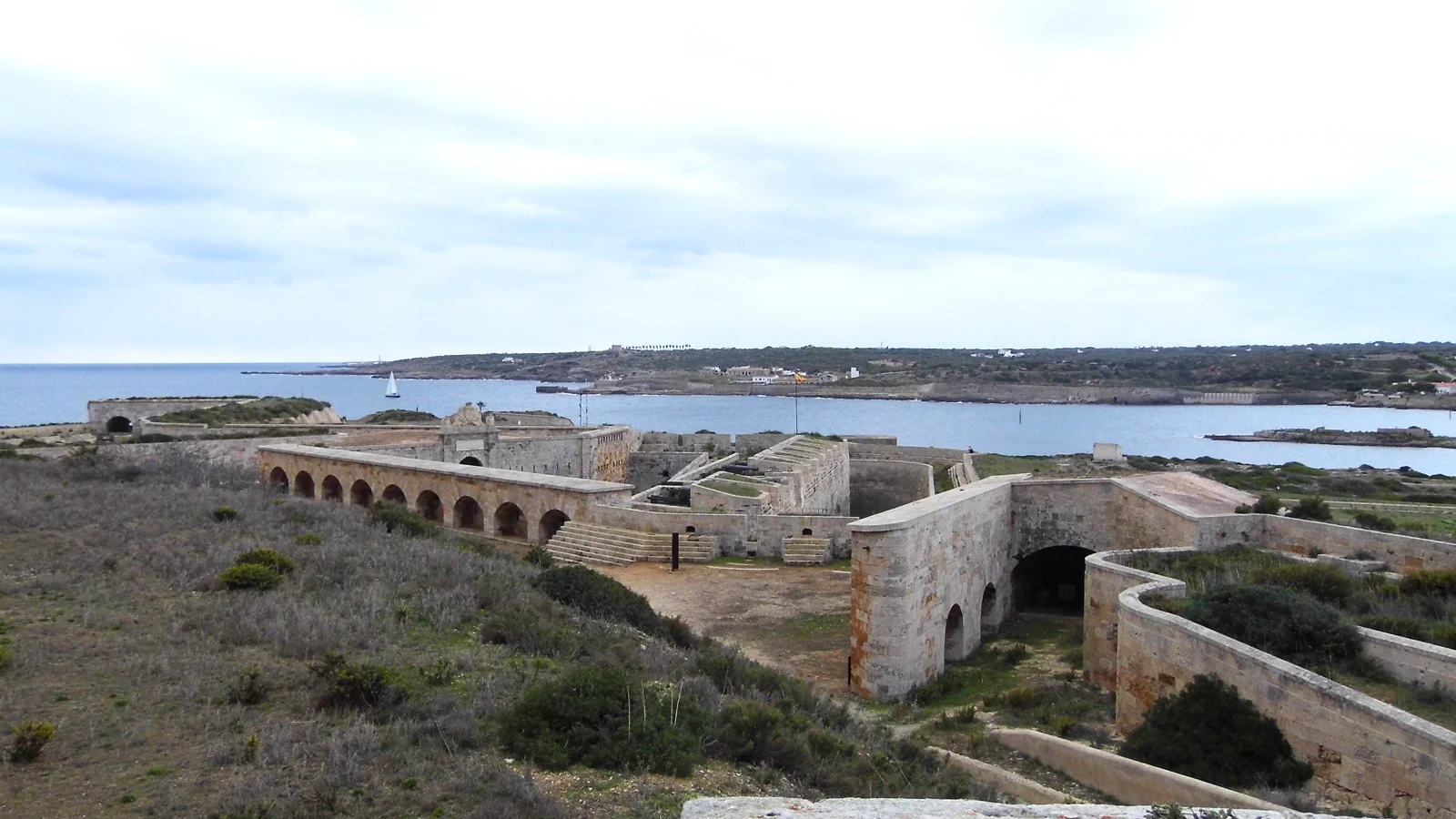
La Mola, officially the Fortalesa Isabel II, is a large 19th-century military fortress occupying the La Mola peninsula at the entrance to Mahón (Maó) harbour in Menorca. It is a substantial site rather than a quick viewpoint: allow roughly 1–3 hours depending on how much you explore, and expect a mixture of open-air walking, defensive structures, underground galleries, artillery positions and harbour views.
That scale is the key to deciding whether to visit. La Mola is particularly rewarding if you like military history, architecture and coastal landscapes, but the exposed site and amount of walking can make it demanding in hot weather or for visitors with limited mobility. Recent visitor reports repeatedly mention heat, limited shade and the size of the complex; these are recurring experience patterns rather than guarantees for every visit.
One clarification is useful from the start: La Mola is the peninsula; Fortalesa Isabel II is the fortress on it. This guide concerns the Menorca site at the mouth of Mahón harbour, not La Mola lighthouse and peninsula in Formentera.
What is La Mola?
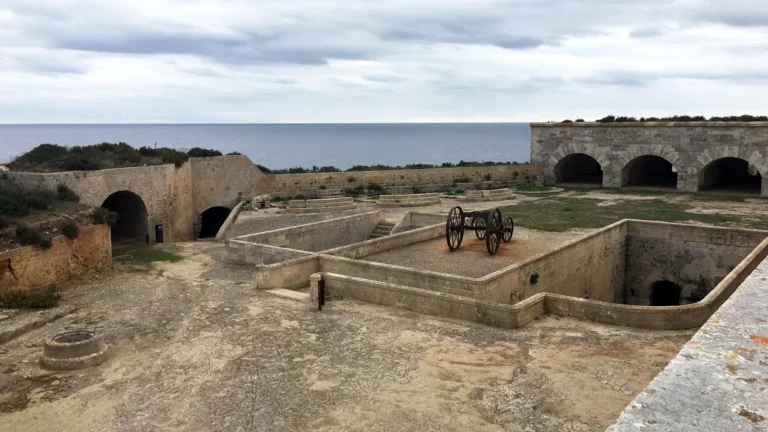
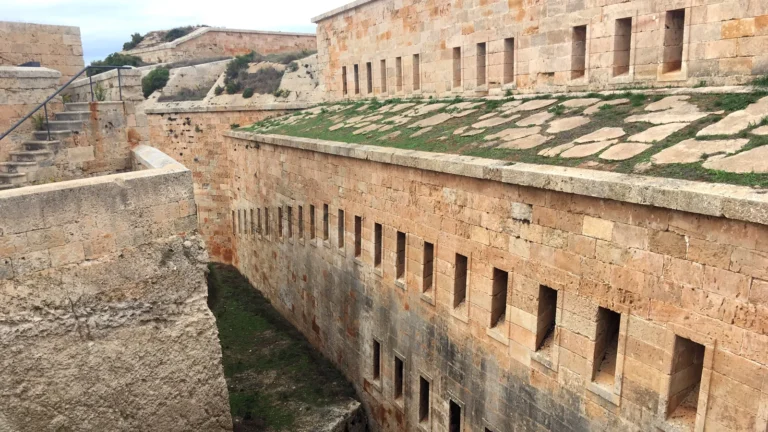
La Mola is the headland forming the northern side of the entrance to Mahón harbour. Fortalesa Isabel II occupies this strategically important position, looking across the harbour entrance and out towards the Mediterranean.
The geography explains why such an imposing fortress was built here. Mahón Port is one of the great natural harbours of the western Mediterranean, and its sheltered waters and strategic entrance made Menorca particularly valuable to competing powers
British control followed the Treaty of Utrecht in 1713, while Spain regained sovereignty in 1802 under the Treaty of Amiens. By the middle of the 19th century, the changing military situation and advances in artillery encouraged the development of stronger defences around the harbour.
The geography explains why such an imposing fortress was built here. Mahón Port is one of the great natural harbours of the western Mediterranean, and its sheltered waters and strategic entrance made Menorca particularly valuable to competing powers. The history of La Mola therefore makes more sense when you understand the harbour it was built to defend.
The present fortress is principally a Spanish 19th-century development. Construction and fortification work began in the late 1840s, with the major project developing through subsequent decades. The fortress was inaugurated in 1852, while work and adaptation continued as military technology changed, with completion generally associated with 1875. Different sources give slightly different dates for individual stages, so it is more accurate to think of La Mola as a fortress developed and modified over several decades than as a building with one simple construction date.
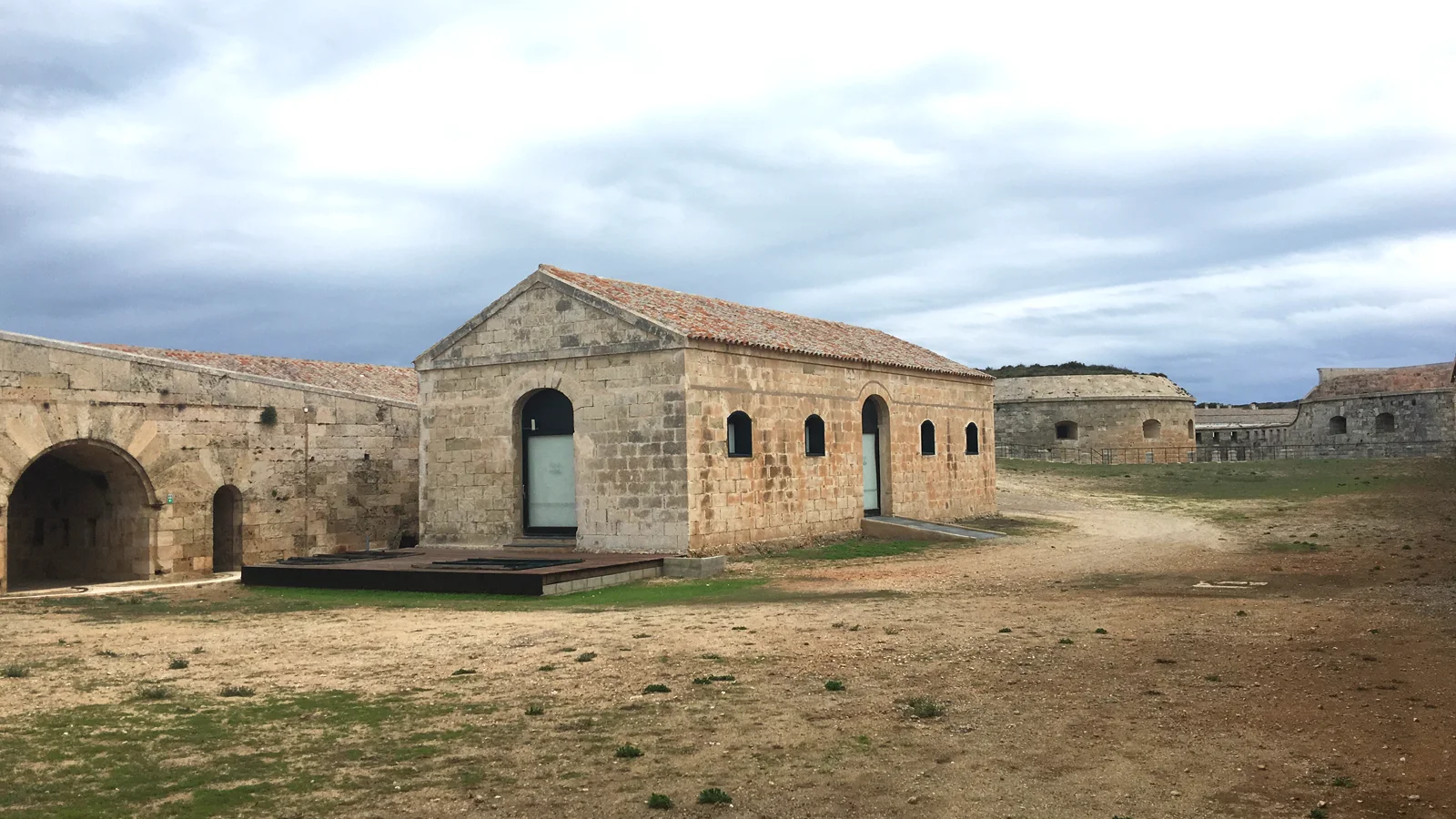
The Spanish Ministry of Defence describes La Mola as an interconnected defensive system rather than a single monumental building. That distinction matters when you visit: the walls, moat, covered routes, galleries, forward works and artillery positions are all part of the experience.
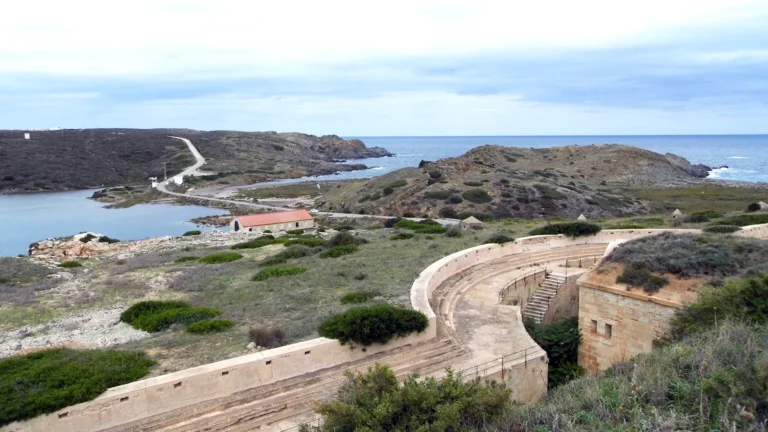
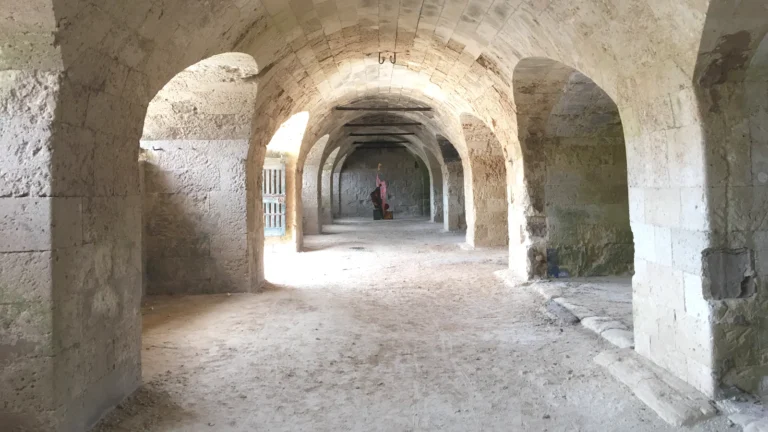
Why was La Mola Fortress built?
Menorca’s strategic position
The reason for La Mola’s location is straightforward: whoever controlled the entrance to Mahón harbour had a major defensive advantage.
Earlier fortifications already occupied the harbour area, including the older Castell de Sant Felip on the opposite side of the entrance. La Mola represents a later phase in this defensive story, when military engineers were responding to new weapons and a changing strategic environment.
A fortress designed as a system
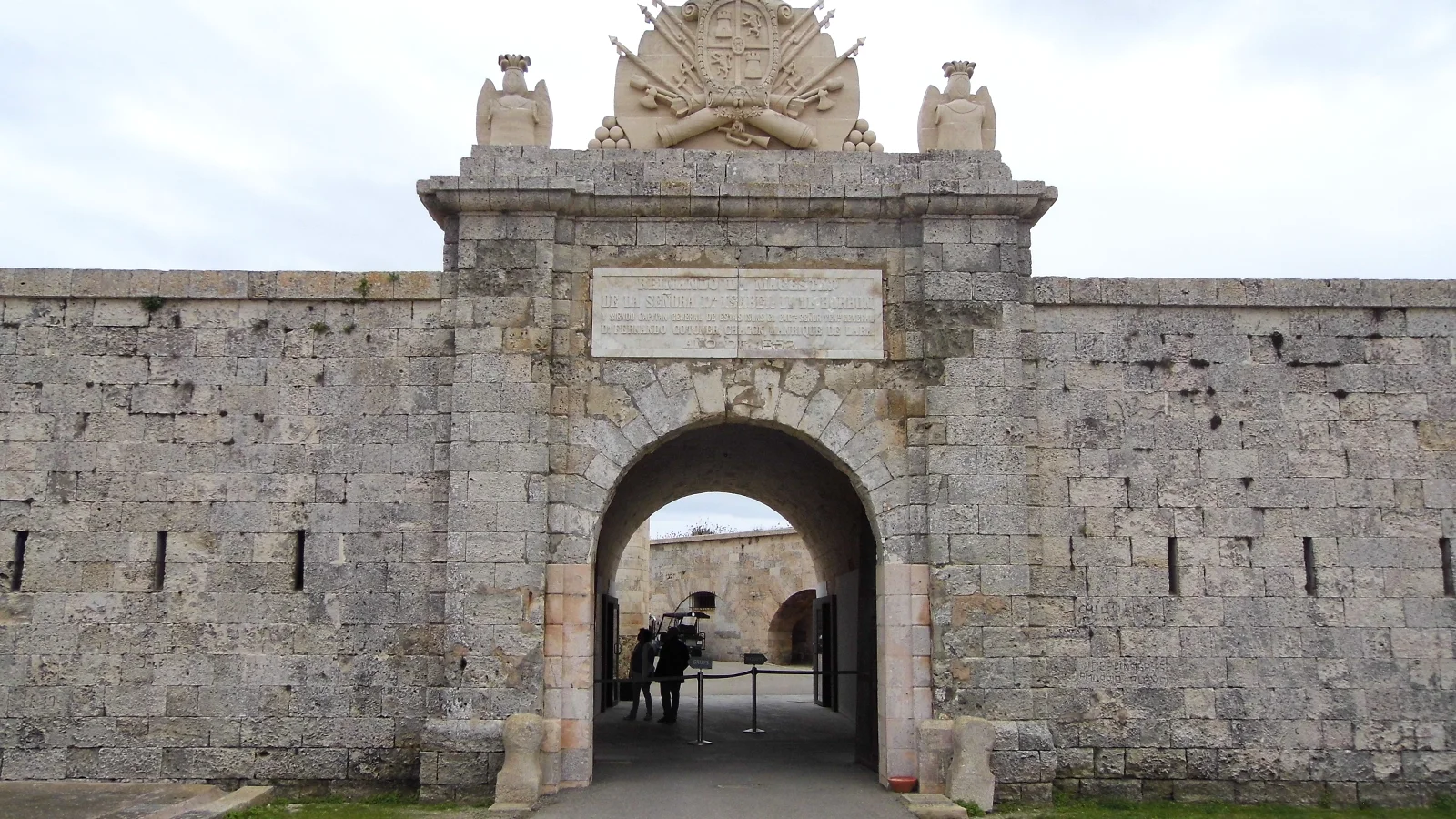
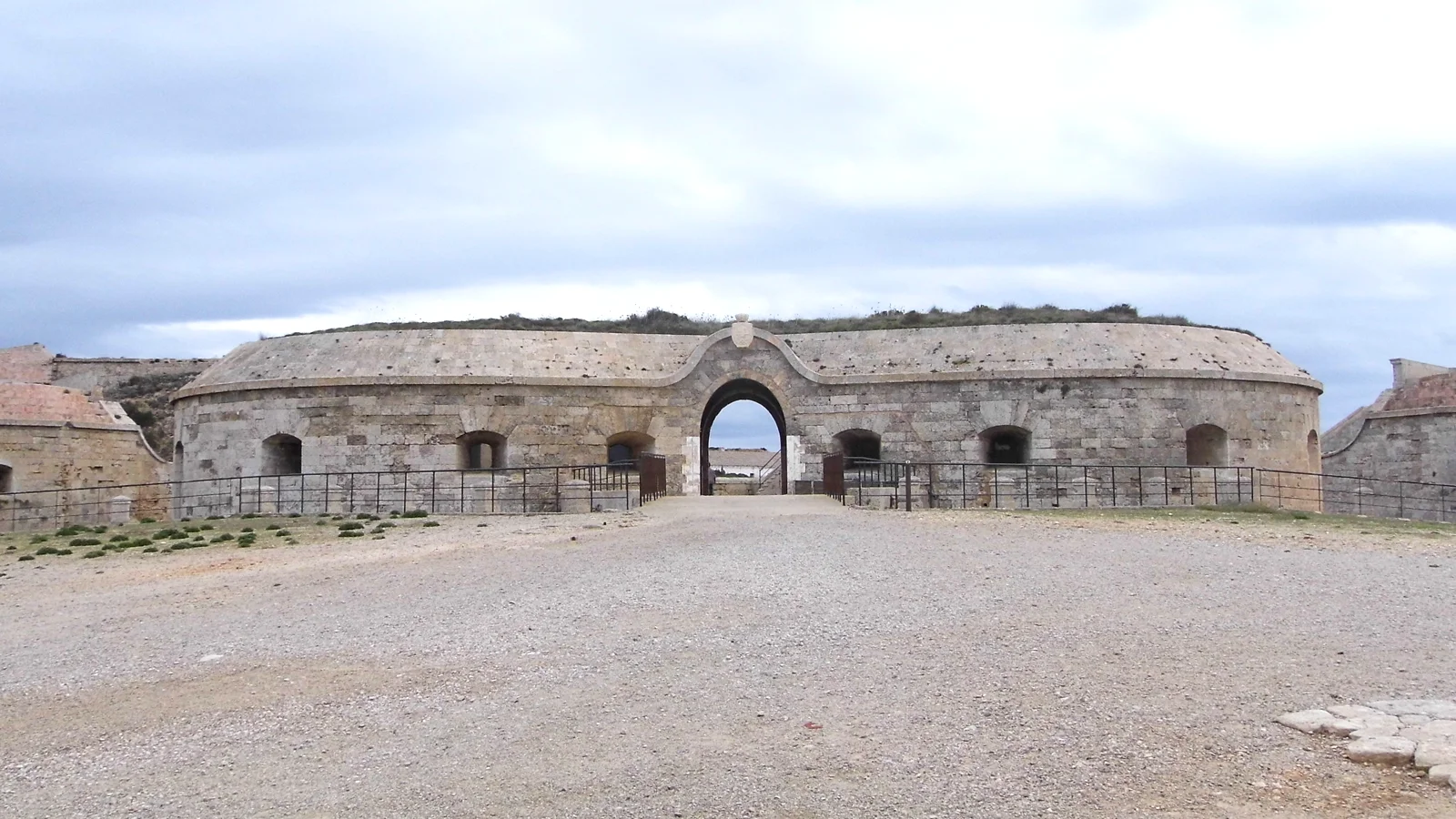
The complex incorporated defensive walls, moats, covered ways, forward works and extensive underground sections. The hornwork, or Hornabeque, formed a forward defensive position, while the Queen’s Gate became the principal entrance on the maritime-facing front.
The result is much easier to understand on site if you stop thinking of La Mola as a castle. It is better described as a defensive landscape spread across a peninsula.
Military technology kept changing
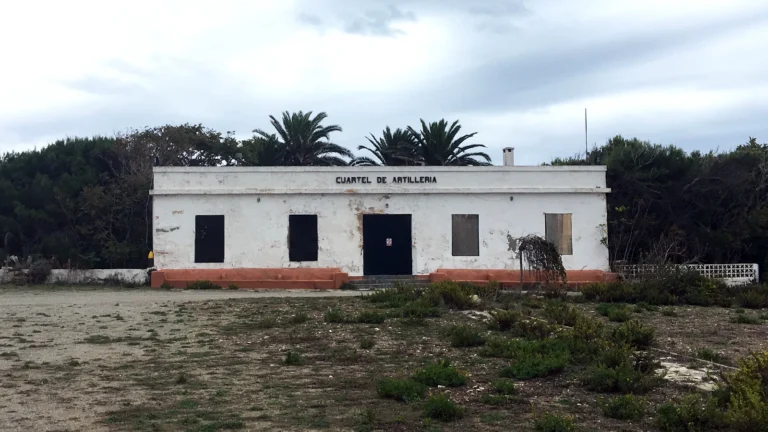
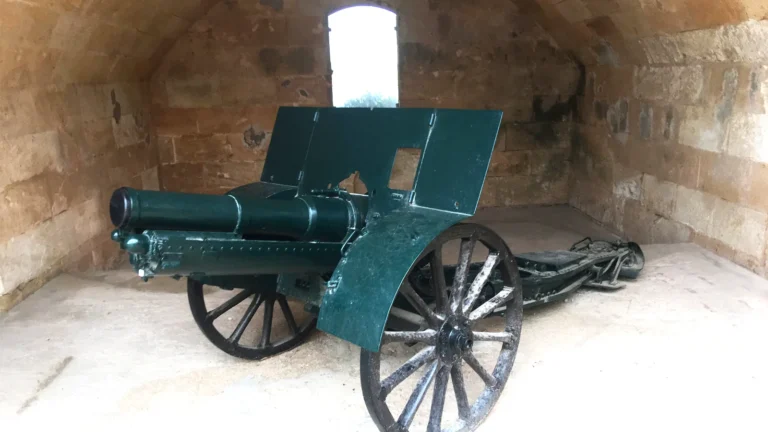
La Mola was repeatedly adapted as artillery developed. Later coastal batteries, including positions associated with Vickers guns, add another layer to the site and explain why a visit is not simply an exploration of one period of 19th-century military architecture.
That layering is one of the more interesting aspects of the fortress: the site records changing ideas about how a strategically important harbour should be defended.
What can you see at La Mola?
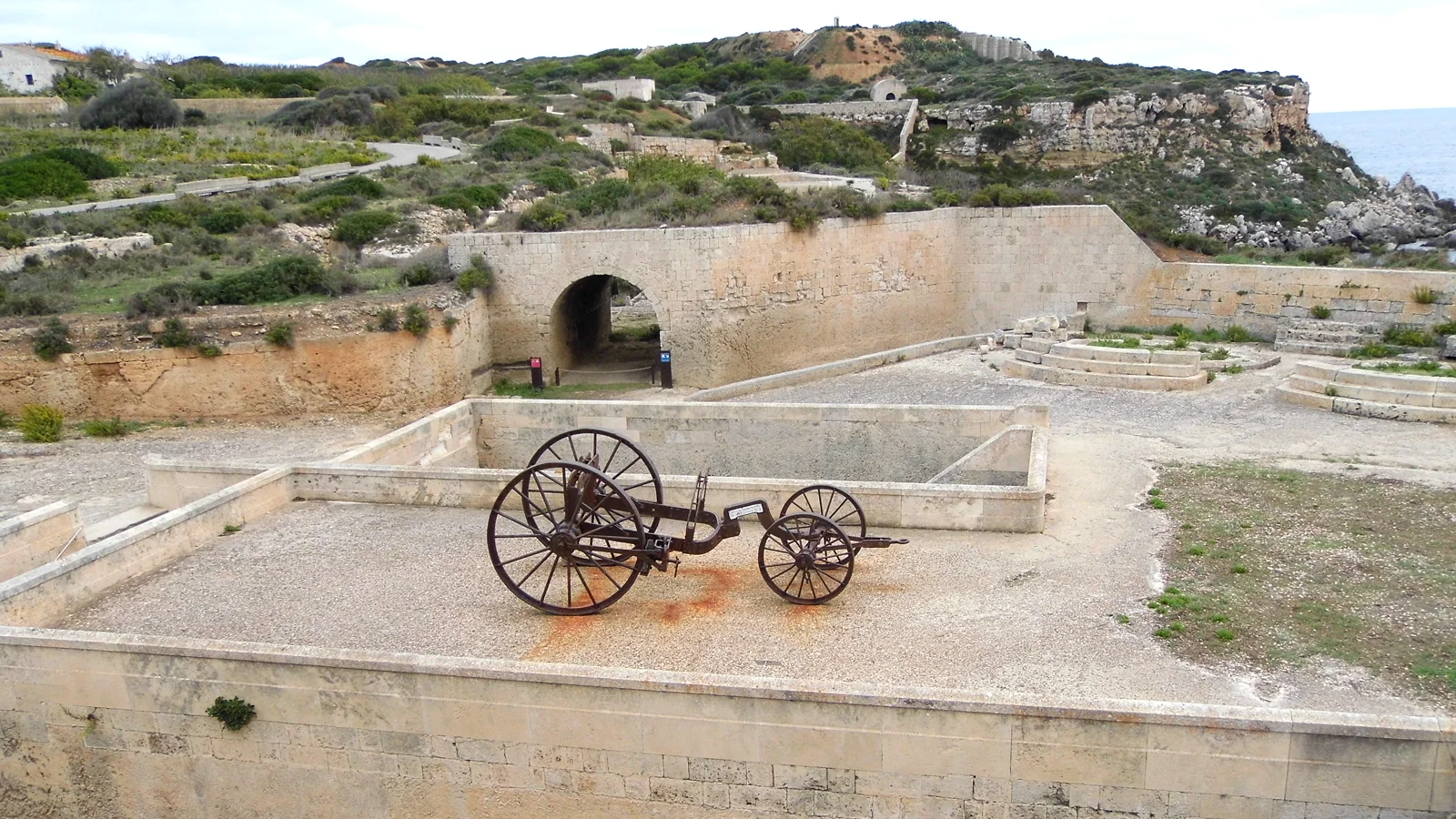
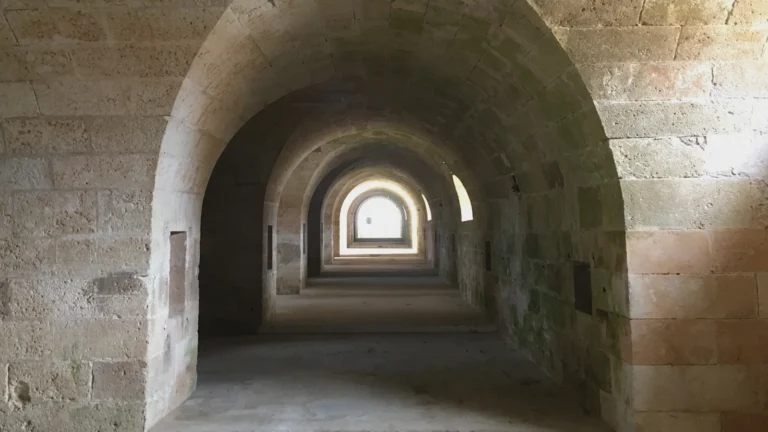
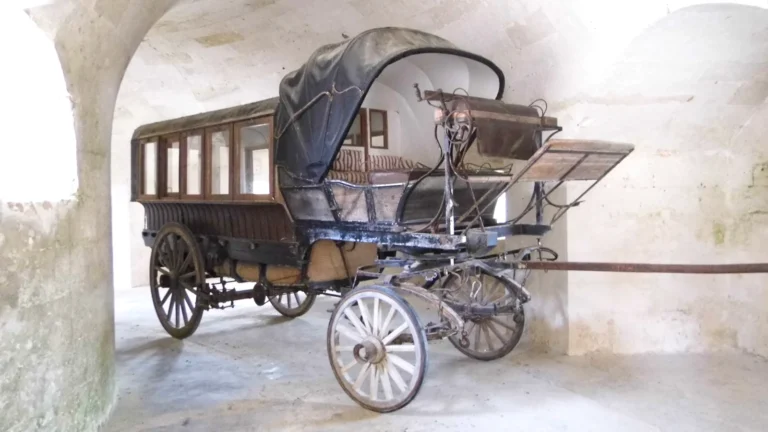
There are enough named structures at La Mola to turn a guide into a catalogue. For most visitors, it is more useful to know what the principal features tell you about the fortress.
Queen’s Gate
The monumental Queen’s Gate is the principal entrance and one of La Mola’s most recognisable architectural features.
It is also a useful introduction to the way the fortress worked. The entrance was not simply an impressive gateway; it formed part of a carefully controlled defensive approach involving walls, moats and other obstacles.
La Mina and the underground galleries
The underground sections are among the features that distinguish La Mola from a conventional fort or museum.
Galleries and passages reveal the defensive infrastructure beneath the visible fortress. They also help explain why the visit can take considerably longer than the exterior appearance initially suggests.
For visitors who are more interested in exploring spaces than reading historical displays, the underground areas are likely to be among the most memorable parts of the complex.
Defensive walls, moat and loophole galleries
The walls, moat, covered routes and loophole or embrasure galleries make the scale of La Mola easier to understand.
Rather than seeing isolated monuments, you can follow the logic of the defensive system: how an approaching force would have encountered successive obstacles and how different parts of the fortress supported one another.
Vickers Battery
The later Vickers Battery provides a striking contrast with the earlier defensive architecture.
Vickers coastal artillery formed part of the island’s later military defences and demonstrates how La Mola continued to evolve as weapons technology changed.
Princess Tower
The Princess Tower is another significant structure within the complex. It forms part of the later visitor experience alongside the defensive works and viewpoints.
The viewpoints
The views are not merely an added bonus. They explain the fortress.
Official military-heritage information identifies viewpoints including Clot de La Mola, Queen’s Gate, the Hornabeque, Princess Tower, Vickers and Sa Punta de s’Esperó. From these positions, the harbour entrance and surrounding coastline make the strategic logic of the site much easier to appreciate.
How to get to La Mola from Mahón
By car
A hire car is the simplest option. From the far end of the Mahon’s harbour take the Me-3 road to Cala Llonga, then pick up the signs to fortalesa de la Mola and continue on the Me-3 road. Bypass the La Mola barrier and continue. You’ll soon find a free car park, near the entrance.
If you need to a rental car we would recommend reading our guide Hiring a Car in Menorca.
By taxi
For visitors staying in Mahón or Es Castell without a car, a taxi is a straightforward alternative. However, if you do take a taxi plan the return journey before you set out.
For the islands single taxi company call Radio Taxis on: 971 367 111
By water taxi
From May to October, a water taxi can be booked from the port of Mahon or Cala Fonts. For more information call +34 679 202 605
By bike or on foot
Cycling or walking can suit active travellers, but the distance should be considered alongside the heat, wind and amount of walking required once you reach the fortress.
By bus
There are no public buses available
Visitor information
- Location: La Mola peninsula, Mahon, East Menorca
- Best for: History and architecture enthusiasts, families with older children, couples and travellers who enjoy substantial historic sites.
- Facilities: Café, shop/bookshop, audio guides, Buggy rental and guided visits
- Visit length: Allow around 1-3 hours
- Parking: Free parking nearby
- Nearby resorts: Es Grau, Binibeca, Punta Prima
- Opening times: Daily, 10:00–20:00
- Ticket Prices: General admission: €8.25, Children 6-11: €4.25, Youths 12-16 & Over 65’s: €5.75
Contact details
- Address: Fortalesa Isabel II, La Mola peninsula, Mahon
- Tel: 971 36 40 40 / 686 659 400
- Email: info@fortalesalamola.com
- Website: https://www.fortalesalamola.com